




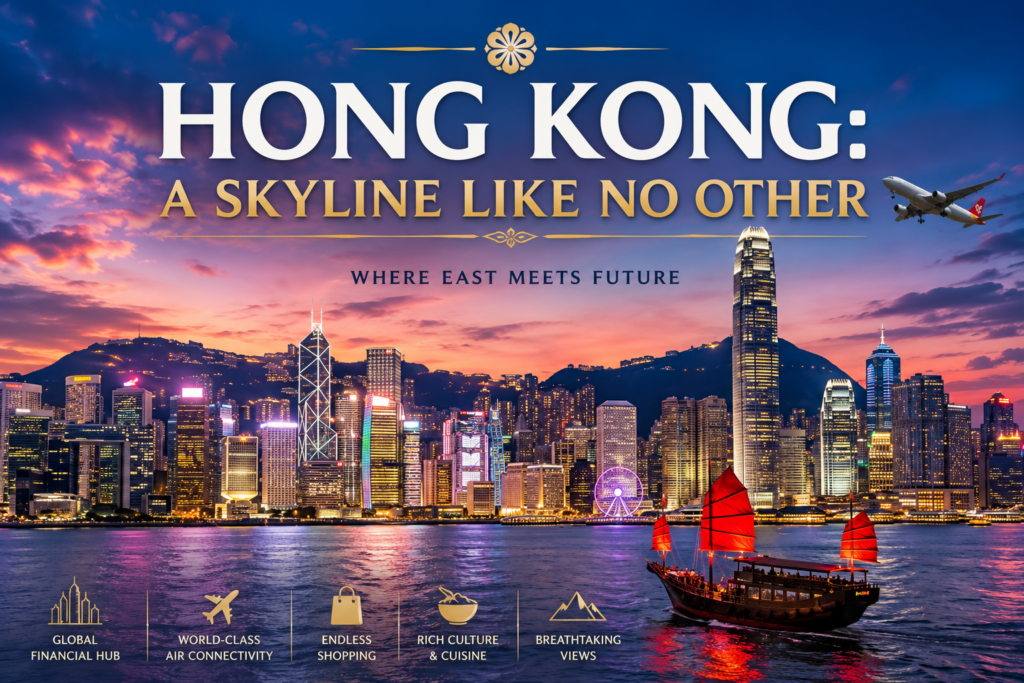
Few cities land a first impression quite like Hong Kong. The moment your plane starts its descent, the view under you spills out this story of ambition, culture, and fresh invention.
Tall skyscrapers go up beside green mountains, ferries slip across Victoria Harbour, and areas full of history settle in as if they belong right there. Somehow it all feels natural and that’s what makes it stand out among the world’s most modern cityscapes.
It’s a place that feels alive from the first minute, and it gives visitors an experience that goes well past wow architecture.
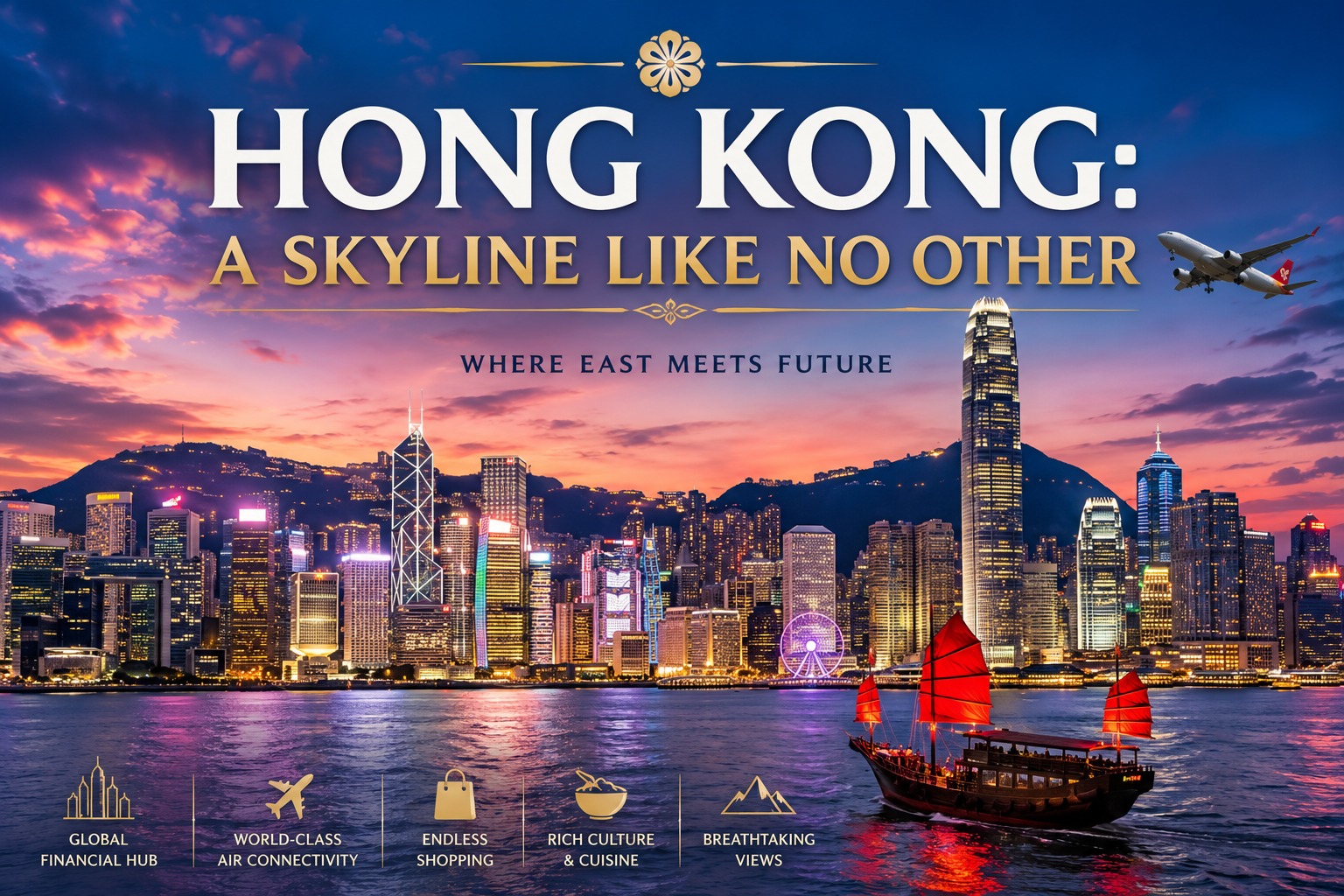
Hong Kong has built a reputation as one of Asia’s most instantly recognizable cities, and the skyline is a big part of that whole identity. With more than 500 skyscrapers climbing above 150 meters, the city carries one of the tallest skyline lines anywhere on Earth.
Still, what’s special isn’t only the count of buildings. It’s the bold mountain backdrop, the harbour glow, and the way everything shifts from sunrise hours into sunset colour. From nearly any vantage point, you get something new, so it can feel like a paradise for photographers, business visitors, and tourists at the same time.
Victoria Harbour is kind the main heartbeat of this remarkable place, more or less. It runs between Hong Kong Island and Kowloon, and for generations it has kept people together, trade flowing, and customs somehow stitched.
During the day, ferries, sleek yachts, and cargo vessels all share that same water, so there’s this steady motion vibe, even if you’re just standing still. Then as night slides in, thousands of lights scatter out and reflect across the harbour, turning the whole skyline into this awe filled show. It pulls visitors from every side of the world, like they can’t help it.
The famous Star Ferry, still somehow manages to be one of the best ways to really get a feel for Hong Kong, despite everything moving so fast. Even with the city rapidly modernizing, those historic green-and-white ferries stay a go to option for locals and tourists alike.
The trip is short, but it gives you views that are really hard to beat, especially of the skyline, and it does not cost much. It kind proves that memorable moments don’t always need a big, expensive price tag.
Standing there like a quiet giant among the architectural icons is the International Commerce Centre (ICC), which is one of the tallest buildings in Hong Kong.
Right next to it, the International Finance Centre (IFC), carries the message of the city’s global financial power. Together, these towers don’t just crowd the horizon they stand for Hong Kong being among the world’s leading business locations, full stop.
Also worth a closer look is the Bank of China Tower. It was designed by the legendary architect I.M. Pei, and its geometric style honestly, the shape itself has turned into one of the city’s most identifiable sights.
Even after all these decades since it was finished, the tower still pulls attention. People notice it for its confident look and for the engineering tricks that were, at the time, pretty innovative.
And while the skyline is usually the star of the show, Hong Kong’s natural side still surprises a lot of first-time visitors. Mountains wrap around a huge portion of the city, and that creates an odd but beautiful contrast between tall buildings and thick green landscapes.
It’s also one of the rare places where hiking paths are only minutes away from busy financial districts. So you get this unusual kind of balance, where you can go for an outdoor adventure without actually leaving the city behind, like you’re getting two worlds in one go.
The famous Star Ferry still keeps, I mean it continues to provide one of the best ways to see Hong Kong up close. Even with the city moving fast into modernization, those historic green-and-white ferries stay high on the list for both residents and visitors.
That brief trip gives you views of the skyline that really can’t be beaten, and it doesn’t cost much either. In other words, those unforgettable moments don’t always need a big price tag, sometimes they just show up.
Standing there, almost like a quiet but loud symbol among the city’s architectural icons is the International Commerce Centre (ICC), one of the tallest buildings in Hong Kong.
Beside it, the International Finance Centre (IFC) feels like a marker of the city’s global financial strength. Together, these towers aren’t only there to fill the skyline, they also hint at how Hong Kong is viewed as a major business destination in the world.
Yeah, and honestly the Bank of China Tower really deserves a little solo spotlight as well. It was designed by the legendary architect I. M. Pei, and that sharp geometric vibe of it has turned into this super recognizable landmark, like people just know it. Even after all these years since completion it still manages to grab your attention with its bold presence, and the kind of inventive engineering that makes you stop for a second.
Of course, while the skyline often acts like the main character, Hong Kong’s natural beauty tends to surprise a lot of first-time visitors.
Mountains frame much of the city, so you get this strange contrast, between dense development and leafy green scenery. There aren’t many places where hiking trails are sitting only minutes away from hectic financial districts.
That unusual balance lets travellers do outdoor exploration, without having to really leave the city behind.
The city’s airport kind of does a lot Here, it helps keep those global links alive.
Hong Kong International Airport is often listed among the worlds top aviation hubs, linking travellers to hundreds of places across Asia, Europe, North America and, uh, beyond. With transport systems that run pretty smoothly, people can usually make it to downtown in less than an hour, so the whole arrival flow feels easy and not very stressful, even if you’re a bit tired.
For business travellers Hong Kong’s efficiency is a real plus, but leisure visitors quickly realize there’s more going on than just shiny towers.
Peaceful old temples sit right alongside busy shopping streets, and street markets keep going strong near luxury boutiques. That mix, sort of old world charm and modern energy, gives the place a personality you can’t really mistake.
Temple Street Night Market is one of those experiences that feels genuinely local. Vendors offer everything from little souvenirs and electronics to street snacks and hand made goods.
The atmosphere is loud in a good way, it matches Hong Kong’s energetic spirit, where shopping, eating, and even casual entertainment stretch late into the evening.
Food lovers say, without much debate, that Hong Kong is one of Asia’s best places to eat, and honestly it kind of shows. Dim sum is still a local must, where families cluster around steaming baskets full of dumplings, buns, and seafood little delights.
And then there are those fresh seafood stalls, international fine dining rooms, plus smaller nearby kitchens that feel like tucked away secrets. Altogether the food scene ends up being as varied as the city itself.
The skyline itself kind of gives you the perfect setup for rooftop dining, like even before you sit down, everything is already looking dramatic.
Restaurants and sky bars scattered around the city let guests enjoy world class cuisine, while still looking out at those lit up skyscrapers, plus Victoria Harbour.
And honestly, watching aircraft come in from far away while you’re dining way above the streets, it makes these little moments that linger, even after you’ve already gone back home.
Shopping is still a big deal too. In Central, luxury brands are lined up along the streets, while Causeway Bay keeps going with retail choices that never really run out, from international fashion to local designers.
Electronics fans, jewellery shoppers, and bargain hunters all end up finding something that matches what they want, or at least something adjacent to it. You can easily spend an entire day wandering through Hong Kong’s shopping areas without feeling like you’ve hit the end.
Culture also keeps shaping the city’s identity, even with all the quick modernization happening around it.
Older neighbourhoods still hold onto traditional architecture, family run businesses, and local customs that have been around for ages. When you walk through these streets you notice another side of Hong Kong, where incense drifts from ancient temples, and colourful festivals pop up and bring communities together throughout the year, sort of without needing to explain it.
Art is getting more visible all over as well. Museums, galleries, public installations, and creative districts highlight both local and international talent.
A lot of the contemporary architecture actually supports the cultural spaces, so it feels like Hong Kong is choosing innovation, yet still keeping its heritage close, even if everything looks new.
The city’s transportation system does deserve a pat on the back, for real, like it works pretty well most of the time. The MTR railway network links almost every big district, fast and on time, so visitors can wander around without all that hassle. And then there are trams, buses, ferries, plus taxis, which adds even more simple choices. So you can get between attractions fairly easy, and you normally don’t need a personal car, at all.
Hong Kong is also this decent starting point for checking out other spots across Asia. The short flights make it pretty easy to get to Tokyo, Seoul, Bangkok, Singapore, Taipei and Manila. Since it’s location is so convenient it has kind of pushed Hong Kong into one of the regions key aviation entrances, and it gathers millions of transfer travellers each year.
Even with all the talk about skyscrapers and money stuff, quiet scenes are never really far away.
Parks, waterfront promenades, botanical gardens, and the nearby islands, they all give you a few moments to slow your breathing a bit away from the city’s hurry. Lantau Island, where the well known Tian Tan Buddha is located, feels like a different story almost, wide panoramic views and hiking routes plus these quiet cultural corners to quietly peek into.
And yeah, sunset is still one of the best times, to enjoy the Hong Kong skyline, really. When that golden light bounces off the glass towers, the harbour turns warmer, then it sort of drifts into thousands of twinkling street lights.
Every evening feels a little off too, because the weather, the cloud layers, and the seasonal conditions keep changing how the view looks.
For photographers, not many cities really hold as many chances in one place. Whether you’re trying to grab the skyline from Victoria Peak, catching reflections along the harbour, or placing old trams beside modern towers, each neighbourhood feels like it hands you new creative angles, and somehow it’s still the same city.
So it’s not all that surprising that Hong Kong keeps showing up in travel magazines, documentaries, and even international ad campaigns, again and again.
What sets it apart from lots of other destinations is the way it can evolve while still keeping its identity. Fresh developments keep changing pieces of the skyline, but the recognizable landmarks stay tightly linked to Hong Kong’s history.
That constant balance of progress with tradition means visitors can, in one trip, get both “what comes next” and “what has always been”.
Every traveller ends up finding something different. Some people come because of business opportunities, others show up for shopping that’s truly world class, for unforgettable meals, or for cultural moments.
And then there are those who just want the photography part, or honestly, just to see one of the world’s most famous skylines with their own eyes. Whatever brings you, Hong Kong tends to go beyond expectations.
Its skyline isn’t just a pile of impressive buildings.
It kind reads like A Symbol resilience, aspiration, invention, and this global link kind of feeling, all mixed up together. Standing near Victoria Harbour, tucked beside the mountains, and lit up every evening with those bright lights, it feels like the spirit of a city that simply never really pauses.
If you’re plotting your next Asia trip, Hong Kong is basically there, waiting, ready to deliver unforgettable looks, memorable pastimes, and a skyline that’s, honestly hard to compare anywhere else.