


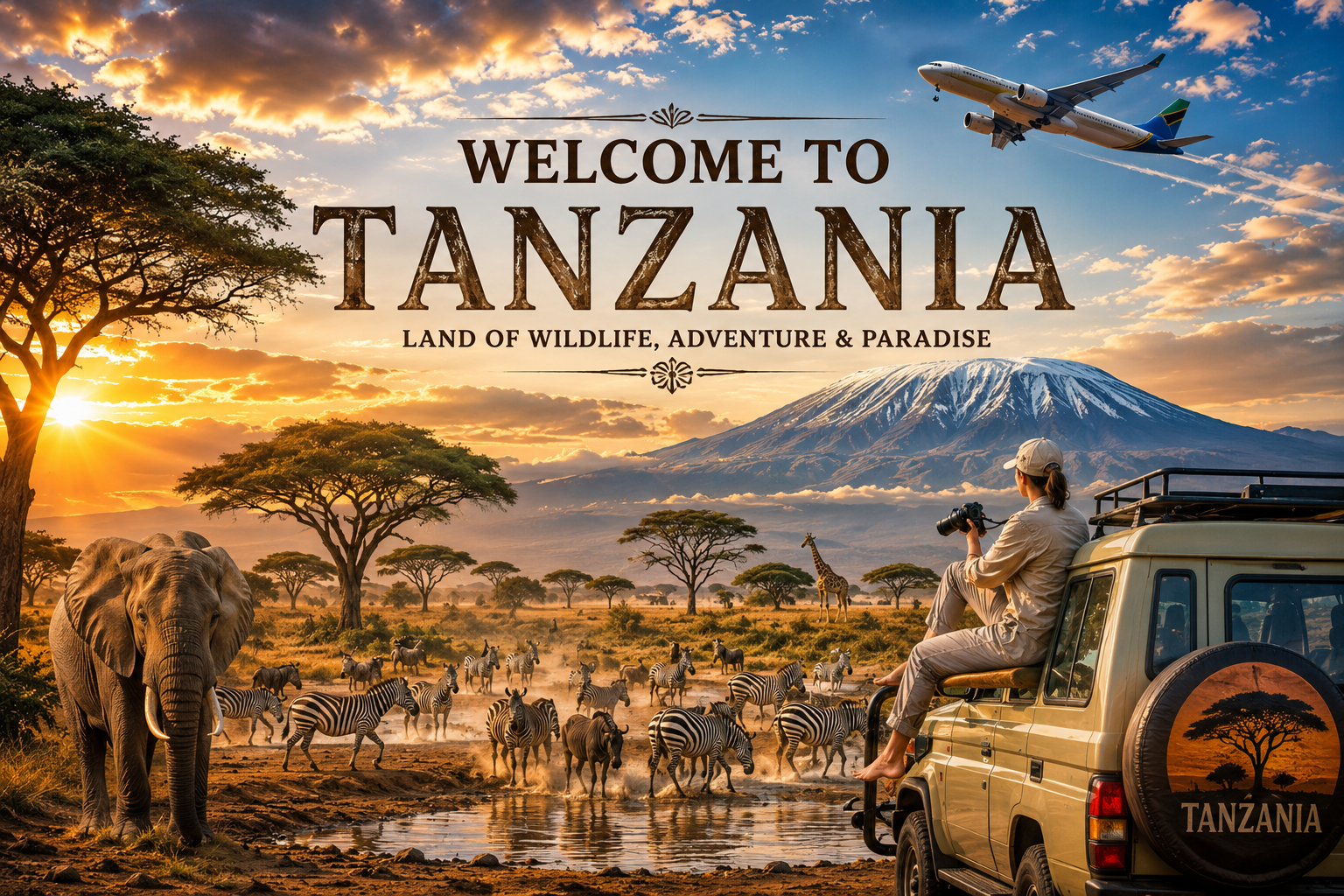
Tanzania is one of Africa’s most breathtaking travel destination, and honestly it has this crazy good mix of wildlife, mountain trips, tropical coastlines, lively towns, and deep cultural roots.
From the endless plains of the Serengeti, to the tall presence of Mount Kilimanjaro, and then on to the crystal clear waters around Zanzibar, and even the calmer, quieter edges of Lake Tanganyika, Tanzania feels like a whole stack of memorable things in one place.
If you’re thinking about your very first African safari, or you just want something more laid-back like a beach holiday, Tanzania seems to give that nice balance between thrill and calm.
Getting to Tanzania is also pretty simple, flying in is usually the easiest start. There are international airports in Dar es Salaam, Kilimanjaro, Zanzibar and in some other regional areas, which connect you to spots across Europe, Asia, the Middle East, and other parts of Africa.
Then, domestic airlines make it easier to hop between national parks, coastal cities, islands, and mountain zones, so you can see more Tanzania without spending ages on the road. It’s kind of like you save time and spend it on being outside.
One big reason travellers keep coming back is the sheer variety. In just one holiday, you might spot thousands of wild animals moving through open grasslands, climb Africa’s tallest mountain, unwind on white-sand beaches, wander through towns that feel centuries old, and also meet vibrant local customs.
Each stop gives a slightly different angle on Tanzania’s natural beauty and the way people there welcome you
Dar es Salaam is like the first stop for many visitors coming into Tanzania. It is the country’s biggest city, and also the commercial center, so you get a mix of modern build up with a kind of traditional African feel.
You can wander past busy markets, oceanfront restaurants, little museums, shopping districts, and those lively neighborhoods that just make everything feel loud and moving.
That whole vibe helps newcomers understand contemporary Tanzania pretty quickly, even if they don’t realize it at first.
The National Museum gives travellers real perspective on Tanzania’s background, archaeology, and cultural heritage stuff. If you’re the type who wants to see local life in a straightforward way, Kariakoo Market is a good choice.
There colourful stalls offer fresh produce, spices, clothing, handmade crafts and even local street food. Walking through it, you kind of feel the city’s daily tempo, and you end up chatting with friendly vendors who are oddly welcoming for strangers.
Dar es Salaam’s waterfront, meanwhile, shows off some great sights toward the Indian Ocean. A lot of people like to slow down at seaside cafés before they continue on, either toward nearby islands or moving inland for safari locations.
Julius Nyerere International Airport works as one of Tanzania’s main entry points, and it also makes domestic flight connections easy across the country.
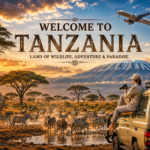
Honestly, no single place represents Tanzania more than Serengeti National Park. It is famous around the world for its endless grasslands and its wild animals in every direction.
The Serengeti gives one of the best safari adventures on Earth. The park stretches across thousands of square kilometers, and it supports one of the most diverse ecosystems in Africa, like a living map that never stops.
Visitors can catch a glimpse of lions lounging under acacia trees, elephants gliding calmly across open plains, graceful giraffes reaching up to feed on treetops, and cheetahs stalking through the high grass.
You’ll also find leopards, buffaloes, zebras, wildebeest, hyenas, hippos, crocodiles, and then there’s hundreds of bird species too, all calling the Serengeti home.
Things get almost unreal during the Great Migration. Each year, more than a million wildebeest, with hundreds of thousands of zebras and gazelles alongside them, move across the Serengeti looking for fresh grazing patches.
Those river crossings, where wildlife scenes unfold in a very dramatic kind of way, have basically turned into some of the world’s most photographed natural moments.
If that isn’t enough, hot air balloon safaris feel like an entirely different story. Being up in the sky, quietly hovering above the plains at sunrise, lets travellers admire the animals and landscapes from a completely other perspective, with sweeping panoramic views that are hard to forget.
Getting there is also made simpler by domestic flights, with options from Arusha, Dar es Salaam, and Zanzibar, so visitors can devote more time exploring and less time on the road.
And then there’s the Ngorongoro Conservation Area, which gives you yet another remarkable safari option. Deep at the center, the Ngorongoro Crater sits there, the world’s largest intact volcanic caldera.
It’s basically a massive wildlife refuge, where thousands of animals live right within the crater walls.
Game drives around the crater tend to turn up elephants, lions, black rhinos, zebras, buffaloes, flamingos, and so many other species as well. Because the animals stay inside the crater all year long, visitors can get top tier wildlife viewing, no matter the season.
The nearby highlands also show off really lovely views, traditional Maasai villages, and chances to get a feel for local customs that have basically shared space with wildlife for generations, in a way that still feels lived-in.
Mount Kilimanjaro is Africa’s highest mountain, and it stays one of the world’s most talked about trekking spots. It climbs to almost 6,000 meters above sea level, and that snow capped top really pulls in hikers from every corner of the planet.
Going up Kilimanjaro usually doesn’t mean you need technical mountaineering skills, so it can work for many travellers as long as there’s good preparation and decent fitness.
Along the way, different routes slide through rainforests, moorlands, alpine desert-like zones, and then those icy summit landscapes, so the whole trek feels like an unforgettable sequence of landscapes that keep changing, sort of without warning.
Even if you’re not planning on climbing, you can still enjoy amazing scenery from nearby towns, plus coffee plantations, and the national parks nearby.
Kilimanjaro International Airport makes it pretty easy to reach northern Tanzania’s safari circuit. Think Serengeti, Ngorongoro, Tarangire, and Lake Manyara.
Tarangire National Park is a bit calmer for a safari, yet it’s still packed with wildlife. It’s well known for huge elephant groups, and for the tall baobab trees that seem to stand everywhere and shape the landscape.
In the dry season, animals tend to gather near the Tarangire River, and that’s when you can spot elephants, giraffes, zebras, wildebeest, lions, and a surprising number of bird species. The whole vibe feels quieter, so Tarangire becomes a great choice for travellers who want a safari without all the crowds.
Lake Manyara National Park sort of greets visitors into a quite different ecosystem, it has this way of feeling both familiar and new at the same time. The place is already known for tree-climbing lions, flamingos, thick green forests, and those very scenic views over the lake .
Big groups of baboons, hippos, elephants, and all those bright kinds of birds also make the biodiversity feel almost unreal.
Nature photographers tend to like Lake Manyara a lot, mainly because the landscapes look so dramatic and the light keeps changing, like, constantly, through the day.
Now Tanzania is often talked about in terms of safaris, but the coastline is equally stunning . Zanzibar, which sits just off the mainland, is one of Africa’s prettiest island escapes. There you get white sand beaches, turquoise water, coral reefs, and layers of cultural history, all together turning into a warm, unforgettable tropical pause.
Stone Town, Zanzibar’s historic core, shows centuries of African, Arab, Persian, and European influence, kind of everywhere you look .
Tight lanes, carved wooden doors, spice bazaars, old buildings, and waterfront cafés give you an atmosphere that feels different than anywhere else in East Africa.
People can check out museums, grab local seafood in restaurants, or just wander through that maze-like network of streets while picking up the island’s intriguing past.
And past Stone Town, Zanzibar’s beaches bring in travellers who want either total unwind or something more active. Nungwi, Kendwa, Paje, and Jambiani have crystal-clear water that works for swimming, snorkeling, scuba diving, paddleboarding, and sailing.
Then, evenings usually feel special with sunsets over the Indian Ocean, while traditional wooden dhow boats add this timeless look along the shore.
Zanzibar’s international airport also helps visitors mix beach days with mainland safari adventures, thanks to convenient domestic flights.
Another coastal spot that’s kind of hard to beat is Mafia Island. It’s well known for untouched coral gardens and this calm, easygoing mood, so it pulls in divers as well as people who just like marine life watching.
During some Months whale sharks cruise around nearby waters, and that turns into these once-in-a-lifetime snorkeling moments, like you can’t really plan it, it just happens.
Then there’s Pemba Island, which still feels like one of Tanzania’s kept secrets. You get green woodland scenes, mostly quiet shorelines, traditional villages, and diving areas that are genuinely exceptional.
So if you want that tucked-away tropical getaway, it fits, even if you don’t want the big crowds or the usual rush.
Lake Tanganyika is another major highlight. As one of the deepest freshwater basins anywhere, it brings incredible views and great chances for boating, fishing, and wildlife sightings. Not far off, Gombe Stream National Park also stands out, because Jane Goodall’s chimp work helped put it on the map.
People often walk through the forest and try to spot chimpanzees in their natural setting, it’s oddly Moving when it’s happening right in front of you.
Ruaha National Park gives you yet another impressive safari option. It’s among Tanzania’s largest parks, and it supports strong numbers of elephants, lions, leopards, wild dogs, plus countless kinds of antelope.
Because it’s remote, there are fewer visitors, so the wildlife encounters feel more personal, like you’re sharing the place with fewer strangers.
Selous Game Reserve is now part of Nyerere National Park, but the style is still special. You can do boat safaris, alongside the classic game drives. Seeing elephants, hippos, crocodiles, and a whole mix of birds from the water, feels like a completely different angle on Tanzania’s animals, not just a change in scenery.
And of course there’s culture, which keeps shaping the whole trip. Tanzania has over 120 ethnic groups spread across the country, each one adding distinct languages, customs, music, dance, and craftsmanship.
It’s not only about landscapes it’s also about how many different ways of life you might meet along the road.
Meeting Maasai communities is one of those things where you kind get to see, up close, how people live day to day, with traditional routines, colourful clothing cattle herding, and customs that kept their strength even with modern development around them. When tourism is done responsibly it helps keep these traditions intact while also giving local families steady support, you know, in a very real way.
Then there’s food, because honestly it’s a big part of travelling through Tanzania. The local cuisine mixes African ideas with Indian, Arab and coastal influences, so the dishes end up tasting rich, and they get enjoyed across the whole country not just one area.
You’ll hear people talk about nyama choma and grilled fish, coconut rice, ugali, pilau, chapati, and on the coast there’s freshly prepared seafood that comes out tasting like sea breeze.
Tropical fruits show up everywhere too, mangoes, pineapples, bananas, coconuts, and passion fruit, making each meal feel fresh and a bit lively.
If you’re the type who really loves coffee, Tanzania will not disappoint. The coffee here is known for its quality, grown on fertile slopes around Mount Kilimanjaro and Mount Meru, where the conditions help the beans develop that deep flavour.
Getting around Tanzania by air is another way to experience a huge range of scenes without changing vacations into something exhausting.
Domestic airlines link Dar es Salaam, Arusha, Kilimanjaro, Serengeti, Zanzibar, Mwanza, Dodoma, Mafia Island, Pemba, and plenty of other places with regular scheduled flights. So a traveller can start in Dar es Salaam, head to the Serengeti for safari moments you remember, then go on toward Ngorongoro Crater, look up at Mount Kilimanjaro, unwind on Zanzibar’s white beaches, and end the trip wandering through the historic lanes of Stone Town before heading back home.
Tanzania keeps drawing travellers because it offers some of Africa’s most recognizable landscapes, paired with real hospitality and a cultural variety that feels alive.
Each stop kind of shows you another chapter of the country, from wide wildlife plains to towering peaks, and from tropical islands to vibrant city energy.
Zipping over to Tanzania safari parks and that coastal paradise vibe, it feels like the door opens into something that, honestly, only a handful of places can pull off.
Whether you find yourself quietly watching lions wander through the Serengeti, standing right beneath Kilimanjaro’s huge peak, slipping into Zanzibar’s turquoise seas, or catching that slow peaceful sunset along the Indian Ocean, each little moment seems to fold itself into a trip you won’t forget.
And for people after wildlife encounters, wild landscapes, cultural discovery, mountain style adventures, plus some laid back tropical decompression all in one place, Tanzania is right there among the best on earth.
With solid flight links, national parks that everyone recognizes, gorgeous islands, and scenery that looks almost unreal sometimes, Tanzania basically hands you a journey packed with memories that stick around, for a lifetime.