








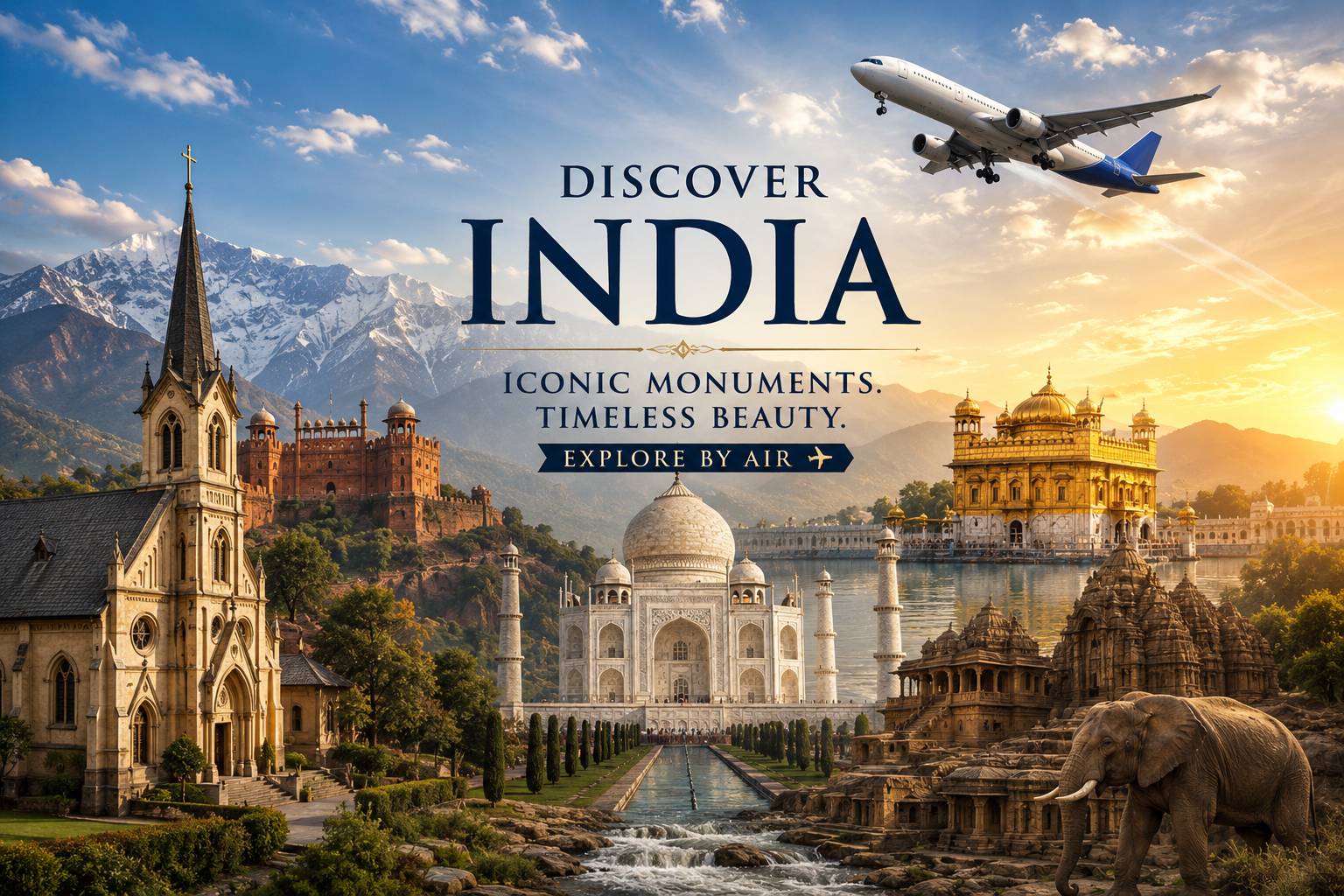
India is one of those places where every journey feels like you’re hopping into some brand new chapter of history, culture, and natural beauty.
It runs from the huge Himalayas up north to the warm tropical beaches down south, so the whole country just keeps changing in front of you. You can find ancient monuments and vibrant cities, quiet hill stations, wildlife sanctuaries, sacred rivers, arid deserts, tea plantations, and even island getaways all in one go.
It’s like all these different pieces add up to one of the most captivating travel experiences on Earth. And honestly, whether you came for heritage, adrenaline, spirituality, street food, or just the kind of scenery that makes you stop mid-walk India seems to have something memorable waiting around each corner.
Taking a flight across India is probably the most simple and comfortable way to get around, yeah, it’s kind of straightforward.
India has one of the biggest domestic aviation systems worldwide it ties key cities and visitor hotspots together with loads of daily flights.
Since airports are spread across Delhi, Mumbai, Bengaluru, Hyderabad, Chennai, Kolkata, Kochi, Jaipur, Goa, Srinagar, and many other spots too, you can try several regions within the same plan, without burning your time on those long road trips or rail schedules.
For a lot of international travellers, Delhi works like a natural gateway into India. The capital brings together thousands of years of history with modern growth. You’ll see old forts right near busy markets, elegant government buildings, and today’s shopping areas, all living together.
So it becomes this place where the past and the present blend pretty seamlessly, kind of as if they were planned that way.
One of Delhi’s most well known landmarks is the Red Fort, a magnificent Mughal fortress made from red sandstone, and honestly you can feel the history the moment you pass under those grand gates.
It’s like a slow reminder of India’s royal past, even if you walk through it kind fast. Nearby Jama Masjid sits there as one of the largest mosques in the country, it greets visitors with impressive architecture and unusually calm surroundings.
Then there’s Qutub Minar, a UNESCO World Heritage Site too, showing off that mix of Indo-Islamic design, and it still counts as one of the tallest brick minarets in the world.
India Gate, with its wide gardens around it, turns noticeably more lively in the evening when families gather just to unwind, and soak up the vibe.
Delhi is also the starting point of the famous Golden Triangle travel route, so travellers connect onward to Agra and Jaipur, either with short flights, or those comfortable road trips that somehow feel easier.
Moving to Agra, you get India’s most recognized monument, the Taj Mahal.
It was built by Emperor Shah Jahan, as a tribute in memory of his wife Mumtaz Mahal. This white marble masterpiece pulls in millions of visitors each year, and the morning sunlight bouncing across the marble walls is honestly something you don’t forget.
And if you keep going beyond the Taj Mahal, then Agra Fort is there as well, with a kind of magnificent Mughal architecture, nice inner courtyards, gardens and royal chambers that face the Yamuna River.
Not too far, Fatehpur Sikri adds another page, with its well kept palaces and mosques, so it feels like the city is still talking softly even today.
Jaipur, the Pink City, gives visitors a feel for Rajasthan’s royal legacy. Colourful streets, grand forts, lively bazaars, and beautiful palaces make Jaipur one of India’s top travel spots, it’s kind of hard not to get drawn in.
Amber Fort sits above the nearby hills, with impressive courtyards, mirror like halls, and wide views over the city below. Hawa Mahal, sometimes called the Palace of Winds, has hundreds of carefully made windows it let royal women watch everyday happenings from inside, without being noticed.
City Palace is still, kind, working as a home for Jaipur’s royal family, though it also welcomes travellers who wander around museums, gardens, and collected historical items.
Across the city, those traditional markets keep buzzing with handmade jewellery and textiles, pottery too, plus other crafts that local artisans make and rework.
Mumbai feels totally different, almost like another mood of India. Since it’s the nation’s financial hub and also the home of Bollywood, Mumbai stays fast, mixed, and always in motion. The skyline blends colonial style buildings with sleek modern towers facing the Arabian Sea.
The Gateway of India is still one of Mumbai’s most well known landmarks. It stands by the waterfront, welcoming travellers who arrive by sea, while giving great scenes across Mumbai Harbour.
Marine Drive becomes particularly loved around sunset, when people collect to catch the sea breeze and watch the city lights shimmer.
Colaba Causeway is a solid choice for shopping, and Chhatrapati Shivaji Maharaj Terminus looks like a true architectural gem, plus it’s a UNESCO World Heritage Site.
Mumbai works as a pretty top notch sort of entrance to nearby spots like the Elephanta Caves, those ancient rock-cut temples are dedicated to Lord Shiva, if you didn’t know already.
Then going further down south, Goa kind of greets travellers with an easy going vibe, golden beaches, Portuguese heritage, and a nightlife scene that stays lively till late. Goa mixes natural charm with a really interesting past, so it has become one of India’s most loved vacation places.
Most people just laze through the day on beaches such as Baga, Calangute, Palolem, and Colva, then evenings start buzzing with beach cafés, seafood restaurants,and live music. If you want a bit more action, there are water sports too parasailing, scuba diving, jet skiing, plus paddle boarding so the coastline never feels boring.
Old Goa is where the older architecture really speaks. You’ll see lovely churches, cathedrals, and monasteries that show the Portuguese presence from centuries ago. The Basilica of Bom Jesus, which is another UNESCO World Heritage Site, still stands out as one of the area’s key historical landmarks.
Kerala is like a whole other journey, altogether. People call it “God’s Own Country,” and it’s pretty famous for calm backwaters, lush greenery, tea plantations, wildlife sanctuaries, and beaches that really feel beautiful, not just, you know, scenic on paper.
In Kerala, Alleppey’s backwaters feel especially, one of a kind.
The houseboats just drift quietly along narrow canals and the view is coconut palms, rice fields, and old traditional villages sitting peacefully side by side. When you stay overnight on a houseboat, you get to experience Kerala’s quiet countryside in a slower way, without rushing, like the whole day itself has time to breathe.
Munnar draws in nature lovers with those rolling, tea plantations that seem to run across the green hills in a kind of never-ending way. The mountain air is cooler, the weather feels crisp, plus you get waterfalls and little scenic stops all around, so it just sort of fits hiking and photography, real well.
Periyar National Park is another big hit for wildlife seekers. You can often see elephants, deer, bison, and a bunch of bird species when you wander around forests and lakes.
The guided boat safaris make it feel calmer, like you’re gliding through quiet water, not just rushing past.
Then Northern India brings people straight into the Himalayan world. Srinagar, in Kashmir, is usually called paradise on earth which honestly, sounds a little too perfect but it kind matches what people expect.
Dal Lake sits like a postcard, ringed by snow-blanketed peaks, and you can take peaceful shikara rides plus visit floating markets that feel unlike anything else in India.
Traditional houseboats give a more personal stay, while Mughal gardens show off colourful blooms during spring and summer too… if you’re lucky with the timing. The whole vibe is soft, and at the same time, very colourful.
Further east, Himachal Pradesh sort of welcomes travellers with hill stations like Shimla and Manali too.
Pine forests, mountain valleys, rivers, and snow capped summits come together and somehow make strong conditions for walking trails, skiing, river rafting, and other adventurous activities.
Leh-Ladakh then, kind of takes everything up a notch. You get some of India’s most dramatic scenery: tall passes, crystal-clear lakes, Buddhist monasteries, and winding roads that keep pulling you forward. Pangong Lake, constantly changing its blue shades, has become one of the most captured natural spots in the country, and people keep coming back for it.
In eastern India, Kolkata gives a different kind of experience its colonial roots, artistic traditions, and literary life all show up in the streets. Historic structures, museums, lively festivals, and traditional sweets create a charm that feels distinctly Kolkata.
Victoria Memorial remains one of the city’s most recognizable landmarks, while Howrah Bridge keeps symbolizing Kolkata’s engineering pride. And beyond those, visitors also wander through local markets, stretch out along the riverside promenades, and catch cultural shows across the day, or evening.
India’s northeast still feels like some of the country’s best kept odd secret, you know, like its tucked away a bit. Meghalaya has living root bridges, rushing waterfalls, deep caves, and thick green forests, all of it together makes these honestly spectacular views.
Cherrapunji, which people once called the wettest place on Earth, comes with dramatic scenes where waterfalls keep spilling from tall cliffs, like nonstop.
Assam pulls in wildlife lovers to Kaziranga National Park. There you can see the world’s largest number of one-horned rhinoceroses, and it’s pretty impressive. Elephant rides and jeep tours give you great chances to spot animals while still soaking up the wide grassland scenery.
India’s wildlife sanctuaries are still among the nation’s biggest draws.
Ranthambore National Park lets visitors look for Bengal tigers moving through ancient forests along with historic ruins.
Jim Corbett National Park, India’s oldest national park, helps protect tigers, elephants, leopards, crocodiles, and also hundreds of bird types. Bandhavgarh, Kanha, and Pench keep drawing wildlife photographers who are chasing those unforgettable safari moments, and you can tell they really mean it.
Then the Andaman and Nicobar Islands feel like a whole other India. They’re out in the Bay of Bengal, and these tropical islands show white sandy beaches, coral reefs, turquoise water, and lush rainforests.
Havelock Island, which is now officially named Swaraj Dweep, brings visitors in with crystal clear water that’s great for scuba diving, snorkeling, kayaking, and even just plain swimming. With colourful marine life, plus bright coral formations, the underwater adventures become something you don’t really forget.
And honestly India’s cultural variety is part of why every stop feels a bit different, like you blink and suddenly you’re in another mood. Each area brings along its own language, the food style, building forms, dress codes, music, holidays and those ongoing traditions.
That whole blend means travellers can run into endless cultures, basically right there inside one country, and somehow, not get bored for a second.
Indian cuisine sort of reflects this diversity really well. Like, North Indian plates such as butter chicken, naan, kebabs, and paneer feel completely different from the coconut-based tastes you get in southern India.
Coastal belts lean into seafood, while Rajasthan is known for savory vegetarian fare. In every state, visitors end up meeting fresh spices, new ingredients, and distinct kitchen customs, even if the trip is short.
Street food also becomes a big deal in India travel, not just as a snack but as a whole mood. Chaat, pani puri, dosa, vada pav, samosas, kathi rolls, momos, and jalebi are only a few of the many local classics people keep hunting down across the country, day after day.
Then there are festivals, which add this kind of extra color to each route. Diwali lights up cities with millions of little lamps, Holi turns the streets bright with powdery colors, Durga Puja changes Kolkata into an artistic scene, and you still get Onam, Navratri, Ganesh Chaturthi, and Eid that show India’s deep cultural rhythms throughout the year.
Moving across India by air can be a smarter choice too, since it helps you sample variety without burning up precious vacation hours.
Domestic airlines link almost every major tourist spot, so it becomes easier to hop between northern mountains, western deserts, southern beaches, eastern forests, and central wildlife parks without that endless waiting.
A traveller might start in Delhi, admire the Taj Mahal in Agra, wander through Jaipur’s royal palaces, then carry on to Mumbai’s busy waterfront, take it slow in Goa on the sands, cruise Kerala’s backwaters, head up to Kashmir’s stunning valleys, and wrap things up in the tropical Andaman Islands, all arranged in one itinerary that’s planned pretty carefully .
India just keeps on inspiring millions of travellers because every place feels somehow different, like it has its own vibe, its own rhythm.
You get ancient monuments that seem to whisper about strong empires, then national parks that guard amazing wildlife, after that the mountain scenes give you those kind of adventures you don’t forget. And of course there are the colourful festival they mark traditions that have lasted for centuries, even if time tries to slow them down a little.
If you fly across India it almost feels like you’re stepping into one of the most varied travel experiences on the planet.
One day you’re looking at the timeless beauty of the Taj Mahal, the next you’re staring at the majestic fortresses in Rajasthan, and later you’re gliding over Kerala’s calm backwaters.
Then Goa shows you golden beach stretches, Ladakh delivers rugged peaks, while Mumbai and Delhi pull you into loud, lively streets that never really pause. Each trip, another chapter appears, and somehow it still feels fresh.
No matter what you’re chasing history or spirituality, adventure or wildlife, scenery or food, culture that you want to understand up close India has constant chances to explore. With a huge flight network, landmark sights that are well known everywhere, spectacular natural wonders, and a diversity you can’t really compare, India stays one of the most satisfying destinations for travellers who want to meet the heart and soul of South Asia.