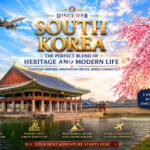



South Korea is a country that kind of surprises visitors from the very first moment they arrive.
It is a place where centuries-old palaces sit next to futuristic skyscrapers, where calm mountain temples look over noisy city streets and where tradition keeps shaping daily life even though technological progress is moving fast.
The country’s remarkable shift during the last several decades has gotten worldwide attention.
Seoul really shows this whole balance between what is old and what is new. Being the capital, it brings together more than nine million people and works as the center of business, politics, education, and culture.
Tall office buildings take over the skyline, while narrow streets with traditional hanok houses hold onto memories of Korea’s past. When you walk through Seoul, it feels like stepping between two different realities, but somehow everything merges together fairly smoothly.
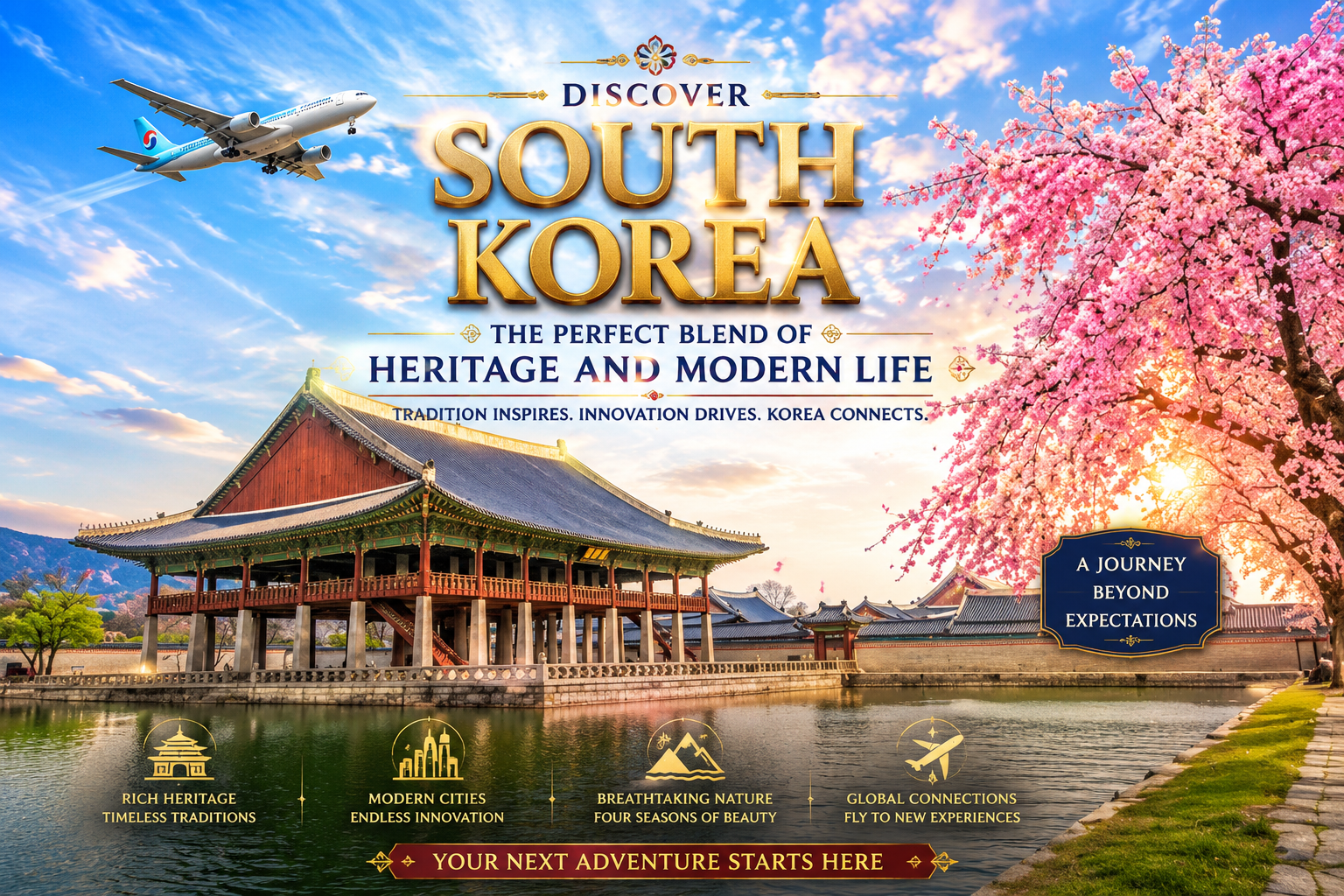
One of the city’s best known landmarks is Gyeongbokgung Palace.
Built during the Joseon Dynasty, this grand palace gives visitors a window into Korea’s royal story. Massive gates, elegant courtyards, colourful architectural details, and carefully restored halls build an atmosphere that feels almost timeless.
Just a short distance away, modern Seoul comes into view in this almost spectacular, wow kind of way. Glass skyscrapers, luxury shopping centers, digital billboards and high speed transportation networks show South Korea’s commitment to innovation, and it feels real.
Places like Gangnam have become internationally known for a stylish atmosphere, top tier shopping, and a lively nightlife. Hard to take in that such sleek surroundings are really only minutes from centuries old palaces and temples.
And the transportation system, it honestly deserves special credit. Seoul’s subway connects almost every neighbourhood with impressive speed and reliability. Stations look clean, the signs are bilingual, there’s digital guidance, and trains come often so getting around feels simple even for first time visitors.
Then there are the fast KTX trains, passengers can move between major cities in just a few hours, so exploring different regions during one trip becomes kind of effortless.
While Seoul often gets most of the attention, South Korea definitely gives you much more than just its capital. Busan, sitting on the south eastern coast, feels kind of like a totally different mood.
You have lovely beaches, fresh seafood markets, views from scenic mountains and this laid back shoreline atmosphere that makes Busan one of the country’s most loved travel spots. Haeundae Beach keeps pulling in visitors year round, and colourful Gamcheon Culture Village does the same in a different way, with artsy lanes full of murals, small galleries, and cozy cafes.
Seoraksan National Park is right up there among Korea’s best known natural sights.
Then spring comes, and it’s another moment you don’t easily forget.
South Korea’s rich cultural heritage, kind of goes way past its old historic buildings.
There’s still a lot of love for traditional music, dance, calligraphy, ceramics, and even clothing, across the whole country.
Visitors usually get that chance to put on a hanbok, which is Korea’s traditional dress, while they wander through historic neighbourhood s. When you see folks in bright hanbok, moving around palace grounds it feels like this soft bridge between back then and now, even if you don’t want it to.
Food is another essential piece of Korean culture. Pretty much every meal carries centuries of culinary tradition, but it also makes room for modern creativity.
Kimchi is still the country’s best known dish, though Korean cuisine has far more variety than many first-time visitors think. Like, bibimbap, bulgogi, japchae, samgyeopsal, and a whole pile of regional specialties show fresh ingredients, loud flavours, and careful preparation too.
Street food has become, honestly one of South Korea’s biggest attractions And each market is different enough that you end up wanting to sample everything, everywhere.
One of Seoul’s most well known places is Myeongdong. It’s this energetic shopping district that mixes fashion, cosmetics, restaurants, and street food into one crazy memorable outing.
International brands sit next to local designers, and beauty stores keep pulling visitors toward South Korea’s skincare industry which is pretty globally influential by now. Bright lights, chatty vendors, and endless shopping options make the atmosphere feel lively from morning, all the way until late at night.
South Korea has also sort of turned into a global entertainment powerhouse, you know. Korean dramas, K-pop music, movies and television series have really managed to capture audiences across literally every continent.
Fans then fly in or travel around the world to see filming locations, entertainment company buildings, and all those music-related attractions. Because Korean culture is so widely popular now, it has introduced millions of people to the country’s customs, language, and day to day lifestyle, even if they didn’t know where to start before.
Even with the modern image, there’s still a deep sense of respect for family education, and community that sticks in Korean society.
Traditional holidays like Chuseok and Seollal still pull families together for celebrations, you can feel it. People honour Ancestors, and those events quietly strengthen the family connection. Visitors often realize that the cultural values are still just as important, not replaced by technological progress, and sometimes they’re the real reason people pay attention.
Religion, too, has shaped South Korea’s history for a very long time. Buddhist temples, scattered over mountain scenery, offer calm places for reflection and meditation.
Lots of temples invite travellers through temple stay programs, so you can experience monastic life up close while also learning about Korean Buddhism. The stillness there becomes a kind of refreshing counterpoint to the country’s fast paced cities.
Safety also adds to the appeal. Many travellers say they feel at ease walking around cities during daytime and at night, which is why South Korea ends up being, honestly one of the most welcoming destinations in Asia.
Each destination you visit seems to show another layer of the country, and it’s like you can feel the personality under every street. It also proves that heritage and modern life don’t actually have to compete they can sit side by side in that rare kind of balance.
South Korea has also been turning into a sort of leader in sustainable tourism. Local cities keep investing in green pockets of space, cleaner movement options, renewable power, and more environmentally kind infrastructure.
Parks get kept in careful shape, cycling corridors keep getting longer, and electric cars are now seen pretty often. All this means visitors can experience contemporary cities, while still breathing in cleaner, healthier surroundings, not just seeing them.
Aviation kind of helped a lot with South Korea’s rise as a worldwide stop. Incheon International Airport keeps showing up near the very top among global airports, mainly because it runs efficiently, uses modern systems, delivers strong customer care, and provides excellent passenger areas.
For millions of travellers , Incheon is the first real glance of Korea, with smooth border processing, easy transport links, cultural displays, shopping, and places to eat… all in one place.
From there, the airport links South Korea to hundreds of places across Asia, Europe, North America, Australia, and the Middle East.
Big airlines keep widening their international routes, which further strengthens Korea’s role as one of Asia’s most important air travel hubs. And as worldwide journeys keep climbing, South Korea seems ready, to welcome even more international visitors without much delay.
Business visitors also value South Korea’s modern setup and its well-developed economy. Innovation can be spotted almost everywhere, you know. Smart traffic systems handle busy intersections, digital payment methods make shopping feel simpler, and artificial intelligence helps across a bunch of public services.
Even small convenience stores often carry self-checkout systems and some automated tools that, really, make the customer experience smoother. All of this, day after day, shows how technology has slipped into daily life, not just as a shiny attraction.
But still, South Korea keeps safeguarding its historical gems.
UNESCO World Heritage Sites protect big moments from the nation’s story.
Ski resorts that are only a few hours away from Seoul seem to pull in families and adventure seekers, because you can spend time up on the snowy mountains and still enjoy modern facilities. You also get this mix of sights snow covered temples and frozen lakes, they look calm and striking, but then it clashes in a good way with the bright scenery you see in spring or autumn.
Basically the seasonal changes keep things moving, so each trip feels different in its own way
Fashion is still doing its part in shaping Korea’s global image too. Plus the beauty industry has been especially influential, introducing skincare products and routines that a lot of people abroad have started using
The warmth and hospitality of Korean people leaves, a kind of lasting impressions on a lot of travellers .
Every city and region has its own visual personality, so travellers keep searching and looking around, for one more viewpoint.
Many visitors add filming locations and entertainment districts to their schedules too, which adds another layer, to the whole experience.
And honestly, food is still one of the biggest reasons many travellers come back. Korean barbecue is famous everywhere, but eating it in South Korea feels, completely different.
Families and friends gather around tabletop grills, sharing freshly prepared meats, crisp vegetables, and side dishes, all in a relaxed vibe that makes conversation easier. Meals become social occasions rather than just places where you simply eat, and that matters more than you think.
The warmth and hospitality of Korean people leaves, a kind of lasting impressions on a lot of travellers. Locals often go a little bit out of their way, to help visitors with directions, suggest restaurants, or talk through cultural customs.
Even if there are language differences here and there, genuine kindness usually manages to bridge the gap anyway. Those simple day to day moments can turn into some of the most memorable parts, of a trip.
Photography enthusiasts quickly notice South Korea is full of chances behind the lens. Sunrise over mountain temples, vibrant street markets, futuristic skylines, calm bamboo forests, colourful lantern festivals, and coastal cliffs, all give you stunning subjects.
Every city and region has its own visual personality, so travellers keep searching and looking around, for one more viewpoint.
Seafood lovers will find pretty impressive options along Korea coastline. Fresh fish markets, coastal restaurants and island communities serve meals with ingredients caught only a few hours earlier, like really fresh and all that.
Regional specialties change by area across the country so visitors get new culinary experiences no matter where they end up going.
That mix of heritage and modern life becomes especially clear during these moments.
A centuries-old palace lit up under modern skyscrapers, a traditional temple standing calmly near busy shopping streets, or families wearing hanbok while taking photos against futuristic skylines… all of it, really shows what makes South Korea unique. It’s like the past and the present share the same frame.
Real modern tech makes everyday life easier, without erasing cultural identity, and you still see historic landmarks doing what they always did… quietly motivating the next generation.
Every single stop feels like its own little narration, each season brings some sort of different scenery, and somehow every traveller manages to keep a personal memory.
Whether you’re standing within an ancient palace, hiking through mountain forests, roaming through lively markets, settling on Jeju Island for a while, or watching Seoul’s skyline shimmer after sunset, you get the sense of a country that holds onto its past while also running toward what comes next.
South Korea also isnt just a place people visit once then forget. It’s more like a return invitation, a come back and learn another layer kind of idea.
When you mix timeless heritage with world class innovation, add warm hospitality, memorable food, stunning views, and even cutting edge technology, the whole experience becomes oddly hard to compare with anywhere else.
And it is that balance, steady and deliberate, that keeps drawing in millions of visitors and strongly places South Korea among Asia’s most rewarding destinations