








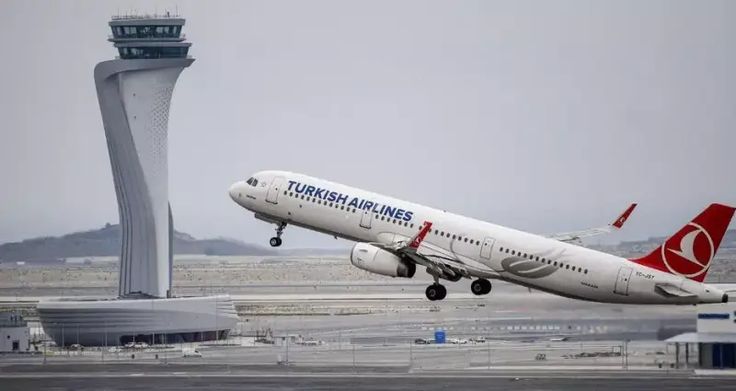
The departure boards inside Istanbul Airport rarely stop doing their thing. Flights head for London, Dubai, Frankfurt, Doha, New York, Bangkok, Paris, and dozens of other places every hour while.
travellers hustle through crowded terminals, with backpacks, business bags, and those oversized suitcases that never seem to fit right.
Outside the glass walls, aircraft keep taxiing constantly beneath bright runway lights, so it looks like almost everything is nonstop , from morning right until late night, kind of hard to even blink.
Turkey’s aviation industry is growing at a pretty remarkable pace in 2026, and the country is slowly turning into one of the most important air travel hubs linking Europe, Asia, Africa, and the Middle East.
Passenger traffic keeps climbing, airlines add new routes, and airports are managing more travellers than ever before, like it’s routine now.
And yeah, this growth isn’t happening quietly. It shows up in small ways, that are kind a hard to ignore and then you notice it everywhere.
In terminals, security lines get longer, departure lounges feel busier, and airlines keep adding extra flights just to stay ahead of demand. Tourism, business travel, international trade, plus that strategic position everything together is quietly powering Turkey’s aviation boom.
Honestly the country sits in one of those especially valuable positions for global aviation. A flight leaving Istanbul can reach major cities across Europe, the Middle East, Central Asia, and North Africa within just a few hours.
That geographic advantage gives Turkish airlines access to a massive passenger pool that few countries can really match.
Airlines also know how strong that setup can be. For years, Turkey has worked on strengthening aviation infrastructure while putting serious money into airport expansion, newer aircraft, and better international connectivity. Now those investments are starting to show results, as passenger numbers keep rising across the country.
Tourism plays a big role in this growth, you know it sort of drives everything. Millions of travellers come to Turkey every year, and they’re not just random stops they’re looking for history, beaches, shopping, food, cultural experiences and those stunning, landscapes.
Some people start with Istanbul’s famous landmarks , while others wander toward coastal resorts, ancient ruins, mountain regions or those energetic city centers packed with restaurants and nightlife.
That variety kind of pulls in visitors from everywhere.
A family from Germany might spend a week by the Mediterranean coast. A traveller from the United States could arrive, to dig into Istanbul’s historic districts. Meanwhile visitors from Gulf countries keep showing up in very high numbers, mainly for shopping , leisure, and a more comfortable luxury kind of travel.
And honestly every tourist needs transportation. That makes airports pretty busy all year long. In Antalya Airport, the effect of tourism becomes even more obvious during peak seasons.
Flights keep arriving nonstop with visitors from Europe, the Middle East, and farther out too. Hotels fill fast, transfer buses stack up outside the terminals, and airlines add extra seasonal capacity because demand stays high.
The airport often feels like a gate to summer itself. Airlines are responding, almost aggressively, to that demand.
New routes keep appearing across both domestic and international networks. Turkish carriers seem to understand that direct flights attract passengers who want convenience, without spending hours on extra layovers.
So more cities are getting nonstop connections than ever before.
Passengers also like things simple. If they can avoid one extra connection, most will pick the direct option.
That shift is helping Turkish airports grow their influence across multiple regions, not just one place.
Business travel is, also, adding fuel to the whole thing.
Turkey keeps acting like a key commercial bridge between Europe and Asia, and you can see that in how international companies keep shifting employees around between big cities. Conferences, trade events and investment opportunities, well they also bring in steady passenger movement all year round, not just in the high season.
Business travellers in particular, often fly again and again. Some travellers are basically looping through airports several times a month, helping connect global markets, and keeping industries running that really rely on dependable air routes.
That consistent stream lets airlines hold stronger demand even after seasonal tourism peaks fade.
But the country’s aviation success isn’t only about passenger numbers, not really. Cargo work is rising too. Modern supply chains lean on speedy transportation, and Turkey’s position makes it a convenient logistics hub for companies shipping goods across continents.
Now airports process bigger freight volumes right next to passenger operations, so it becomes another push for economic growth as well.
You might even notice how aircraft that arrive with visitors, can leave with valuable cargo.
So the aviation ecosystem supports more than just holidays and sightseeing. Technology, meanwhile, is getting more and more relevant as traffic expands.
Airports are rolling out smarter systems that are supposed to keep things moving smoothly, even while the passenger numbers just keep climbing.
You see automated check-in kiosks, biometric identification setups and digital boarding passes getting rolled into place more and more, also better baggage tracking tools are showing up everywhere across the country.
Travellers expect convenience these days, like it’s a given, and honestly it sort of is.
They want shorter lines, quicker security screening, up to date flight notifications, and a smooth digital journey from start to finish.
Airports know that small annoyances can turn into quick online complaints that get shared across social media. One delayed baggage incident and suddenly, it’s a viral travel story.
That’s why airport operators keep pouring serious money into technology that improves the passenger experience, while also letting staff handle rising traffic volumes, which is kind a getting intense lately.
Inside Istanbul Airport automation plays a bigger role every year. People move through huge terminals using digital services that cut waiting times and make navigation less of a headache.
Big information screens give real time updates, and the airport apps help travellers locate gates, restaurants lounges, and transport options too.
It starts to feel more like a connected city than a usual terminal, honestly.
That scale really mirrors Turkey’s ambitions. The country wants to strengthen its role as one of the world’s leading aviation hubs, and the infrastructure part stays a core ingredient in that plan.
Airlines are modernizing too. Newer aircraft come with tangible advantages compared with older models.
They burn less fuel produce fewer emissions, and generally make the ride feel better. Airlines gain from reduced operating costs, while travellers get quieter cabins, upgraded entertainment systems, and smoother long haul journeys.
Modern aircraft have become basically a must-have in today’s competitive aviation scene. Passengers compare airlines constantly.
A traveller flying from Istanbul to Singapore might weigh the experience against carriers from the Gulf, Europe, or East Asia. And every little thing counts, from seat comfort and onboard meals to Wi-Fi performance, and even the overall cabin mood.
This competition pushes continuous improvement, step after step. Premium travel especially has become more important than before.
That’s why airport operators keeps investing heavily in technology, that improves the passenger experience while also helping staff manage those bigger traffic volumes coming in day after day. Inside Istanbul Airport, automation plays a bigger role each year more and more.
People move through the large terminals with digital services that cut down waiting times and make navigation feel less confusing. There are massive information screens that deliver real time updates, airport apps also help travellers locate gates, restaurants, lounges, and transportation alternatives.
It starts to feel more like a connected city, than a traditional terminal.
That scale really mirrors Turkey’s ambitions. The country wants to strengthen its stance as one of the world’s leading aviation hubs, and infrastructure still stays a crucial piece of that strategy.
Airlines are modernizing fleets too. Newer aircraft bring clear advantages over older models, they use less fuel, and generate lower emissions, plus you get this calmer, more comfortable experience for passengers that you can feel.
Airlines gain from reduced operating costs, while travellers get quieter cabins , upgraded entertainment systems, and smoother long haul journeys.
Modern aircraft have sort of become required in this competitive aviation marketplace, because everything is so connected now, you know.
Passengers compare airlines constantly. A traveller going from Istanbul to Singapore may end up weighing the journey against carriers from the Gulf, Europe, or East Asia, and every single detail matters, from seat comfort and onboard meals, to Wi-Fi performance and cabin atmosphere.
That competition keeps pushing continuous upgrades. Premium travel has become particularly important, too.
Business-class, and first-class travellers bring in a lot of money, so airlines keep putting serious money into nicer cabin upgrades. It’s mostly about privacy, comfort and a kind of personalized service.
Plus, the food quality matters more than people think, it helps pull in the premium crowd.
So yeah, the whole battle is pretty intense.
A bunch of major airlines are basically chasing the same customer pool, again and again.
Turkey’s airlines seem to get it, like strong service can act as a differentiator in a market that feels crowded, and sometimes a little noisy.
At the same time, environmental worries are bringing fresh problems too.
Aviation is still under constant pressure to cut emissions but also keep growing. Airlines and airports, they’re dealing with bigger expectations, from governments, environmental groups and travellers who want transportation that’s cleaner, somehow.
The industry is changing, but slowly.
New aircraft tech, kind a boosts fuel efficiency, while sustainable aviation fuel programs just keep spreading through various regions and areas
Airports are deploying energy smart systems, electric ground vehicles, and little operational adjustments that are meant to rein in the environmental footprint.
That being said transition won’t happen overnight
Demand for air travel keeps rising, especially in places where tourism is growing, and local economies are expanding too.
Trying to balance sustainability with continued expansion stays, probably one of aviation’s hardest puzzles.
And then there are fuel prices, which add yet another complication.
Airlines really rely on fuel costs that are stable, but global energy markets stay kind of volatile.
If fuel jumps suddenly, it can hit profitability, mess with route decisions, and even force ticket price changes across whole networks.
Passengers usually end up noticing the higher fares first.
Airlines feel the financial pressure right away.
And it’s that situation which makes efficiency, increasingly non negotiable, throughout the entire industry.
Artificial intelligence is giving airlines more muscle when it comes to running day to day operations. Predictive maintenance systems spot possible technical issues ahead of time, before they turn into serious headaches.
Then data analysis, sort of like a quiet navigator, helps optimize routes, tune schedules, and cut down on needless fuel burn.
Most travellers never really notice any of this. They just, you know, feel the result, when flights go smoothly, on time, and without drama.
Still, behind a successful departure there’s this huge pile of planning, technology, and coordination that has to line up just right.
Air traffic congestion is another thing that keeps growing, and I mean it in a sort of snowball way. The skies above Europe, the Middle East, and some parts of Asia keep getting busier, as airlines add more flights to the mix.
To make sure everything stays safe , you really need advanced coordination between the airlines, the airports and the air traffic control systems them selves.
And yes, one delayed flight can start a chain reaction elsewhere. Modern aviation is like a tightly connected network where small trouble, somehow, creates bigger consequences across multiple regions.
Even with those pressures, Turkey’s aviation outlook remains remarkably strong. Passenger demand keeps climbing.
Tourism looks steady and healthy. Airlines keep expanding their networks. New infrastructure investments are adding capacity, and international connectivity continues improving.
The momentum is hard to dismiss. Every evening, aircraft keep climbing above Istanbul, Ankara, Antalya, Izmir, and other Turkish cities, carrying travellers toward destinations spread across several continents.
Inside the cabins passengers flip through travel plans, reply to emails, watch movies , and mentally prep for the next stage.
Turkey’s aviation network is growing because demand is rising from many directions at once. Tourists want simpler access.
Businesses are asking for better connectivity. Airlines see opportunity and move fast.
Airports are getting ready for bigger crowds. And out, somewhere above the country tonight, another aircraft is already crossing, the sky, tying together continents through one of the fastest expanding aviation networks in the world, you know.