







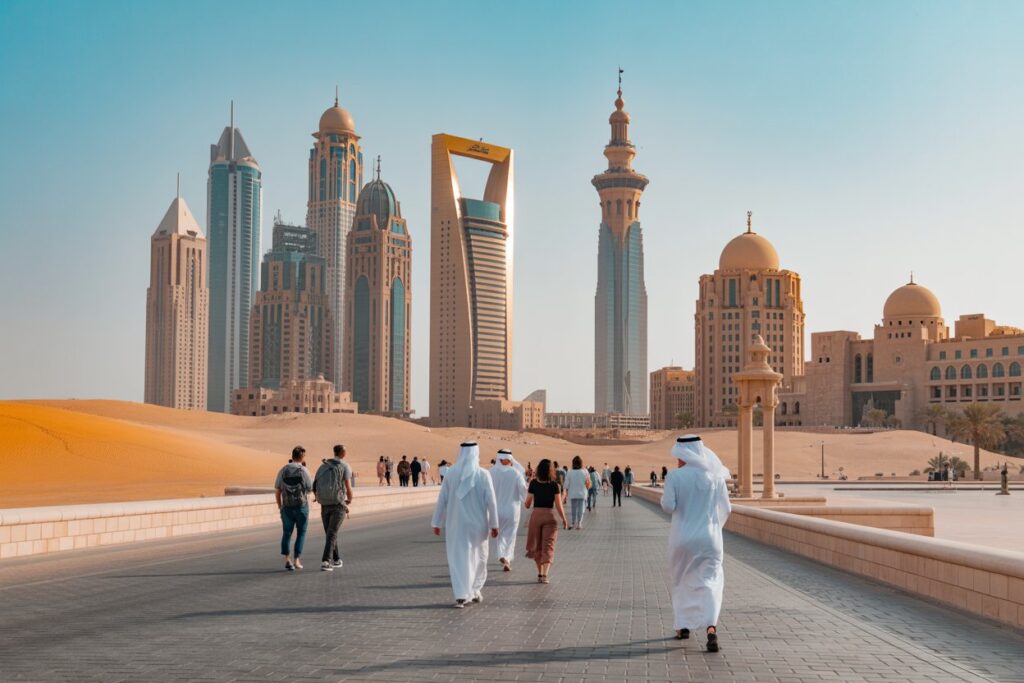
A few years ago, most international travellers tied Saudi Arabia mainly to business travel, religious pilgrimages, and the energy sector.
Now, the whole picture looks different, like it’s been rearranged in a rush. Across the kingdom, airports are getting bigger, airlines are rolling out routes, tourism projects are grabbing global attention, and millions of fresh visitors are expected to land in the next years.
This transformation is moving at an extraordinary pace.
At King Khalid International Airport, it’s hard to miss the signs of growth.
Departure halls stay busy, more or less, all day long, while international arrivals keep rising. Travellers from Europe, Asia, North America and the Middle East pass through terminals with holiday bags in hand instead of business briefcases only.
In other words the aviation industry is stepping into one of the biggest expansion windows in its history.
Saudi Arabia’s tourism dreams are reshaping aviation, from the ground up.
The government’s long-term development plans lean strongly toward diversifying the economy past oil, and tourism is right in the middle of that idea.
New resorts, entertainment districts, cultural landmarks, luxury getaways, sporting events, and mega projects are being built across the country. And every single new destination brings airlines something they really care about passenger demand.
No flights, no tourism growth.
No tourism, and many of those bold projects would find it hard to reach their full potential.
So, that’s why aviation ended up becoming such a central piece of Saudi Arabia’s future plans.
Airports aren’t just transportation facilities anymore.
They’re turning into gateways, built for a larger tourism ecosystem or so it feels like. As visitor numbers rise, airlines and airport operators are trying to forge stronger linkages between Saudi Arabia and the rest of the world.
And the outcomes are already showing.
International carriers keep introducing new routes to Saudi cities while domestic airlines grow their own networks.
Those direct flights that used to sound improbable are now popping up more often, as demand increases from both vacation makers and work travellers.
Saudi Arabia seems to get something a lot of major tourism places figured out a while back.
Accessibility is the key.
People are way more willing to go somewhere when it feels simple to reach. Complicated connections and a narrow set of flight options can easily put potential visitors off.
Saudi Arabia wants to remove these obstacles, by building one of the region’s best-connected aviation networks.
At King Abdulaziz International Airport, passenger traffic keeps climbing, because tourism and religious travel blend together to form solid year round demand.
Jeddah stays one of the country’s most important entry points, bringing in travellers bound for old quarters, Red Sea getaways, commercial hubs , and pilgrimage routes.
The airport usually doesn’t feel calm anymore.
Every day, passengers come in from many countries, which mirrors how international Saudi Arabia’s tourism market has become.
Tourism itself is shifting pretty fast.
For decades, lots of international visitors entered Saudi Arabia for very specific religious reasons.
Even so, pilgrimage is still incredibly important, but the nation is also getting attention from travellers who want beaches, desert adventures, high end resorts, cultural moments, entertainment events, sporting competitions, and historical landmarks, kind of stuff like that.
That wider draw creates new possibilities for airlines, not just small ones either.
A traveller who once did not really consider visiting Saudi Arabia might now look at it like a normal holiday stop. Each extra visitor means more flight demand, more hotel reservations, more dinner spending, and more general economic activity.
Airlines are responding, fairly quickly too.
More seats are being added on routes that already exist, while entirely new destinations keep appearing on airline schedules.
Competition is rising because carriers see the Saudi tourism market as something with long-term value.
And the growth is not only about people coming from abroad.
Domestic aviation is expanding pretty fast, as well. Saudi Arabia is massive, and for many trips air travel is often the quickest option, especially for jumping between main cities and newer tourism areas.
As attractions keep opening across various regions, domestic airlines are, kind of, tightening their connections so travellers can move around more efficiently.
This internal connectivity matters, a lot.
Someone could land in Riyadh first, then later want to look at coastal areas, desert scenery, cultural sites, or even luxury projects located hundreds of miles away. Strong domestic aviation networks make those moves possible.
Also, technology is involved in a big way, supporting this whole expansion.
Saudi airports are really going all in on automation, digital services and passenger experience upgrades, like they are trying to stay ahead of demand.
Automated check in stations, biometric tools, more precise security steps, and digital way finding support help them manage the larger passenger numbers, without turning the whole thing into a pile up.
Most travellers, even the busy ones, expect efficiency.
They tend to look for precise flight updates, fewer queues, simple boarding routines, and a smooth airport feel. Airports know this, because people compare trips across cities worldwide now.
So a traveller landing from Singapore, London, or Dubai is kind of already expecting the same level of ease, no big surprises. Meeting that expectation has become part of Saudi Arabia’s aviation plan.
Inside the terminal halls technology supports smoother journeys, while easing the pressure on staff who still do the human parts.
Digital tools help manage passenger movement, follow luggage status, and push real time information, all meant to keep operations moving, and not just moving, but moving efficiently.
Also, the aviation sector has become more and more data driven. Airlines lean on advanced analytics to fine tune schedules, anticipate maintenance needs, boost fuel use performance, and deal with the rising passenger appetite.
Artificial intelligence is even assisting carriers with quicker operational calls, and in many cases, improving reliability too.
Most passengers don’t even spot these systems. They mostly just feel the outcome:
flights that run smoothly and land on time. Behind that simple experience though, there’s a huge amount of planning, plus layers of technology working together.
And tourism growth is also shaping airline decisions on fleet and capacity.
As demand rises, carriers need aircraft that can handle both regional and long haul routes pretty efficiently.
Airlines are putting money into new fleets, because newer aircraft bring stronger fuel economy, better passenger comfort, and lower costs overall.
Passengers feel that change too.
Cabins seem quieter, the entertainment systems are more sophisticated, and onboard experiences keep getting tweaked. Long-haul travellers want comfort, particularly when they’re spending a lot of hours up in the air.
Airlines also know that rivalry doesn’t stop at ticket prices.
Service quality matters.
Comfort matters.
Reliability matters.
One bad experience can travel fast, especially once social media and travel review platforms start amplifying it.
Visibility has changed aviation in a big way.
Travellers now pass along airport moments, flight reviews, hotel stays, and destination tips to global audiences. A good experience can motivate thousands of future visitors. A bad one can shift perceptions surprisingly quickly.
Saudi Arabia gets how important first impressions are.
For a lot of guests, the airport is their first real, direct contact with the country. Making the arrival feel positive has turned into part of the wider tourism plan.
The country’s aviation goals also back economic growth that goes past tourism.
Better air connectivity pulls in international investment, strengthens trade , supports business travel , and opens up jobs across several industries. Airports often function like economic engines, influencing entire regions.
And honestly, the upside reaches well beyond aviation alone.
Hotels, restaurants, retail outlets, transport providers, entertainment venues, and tourism operators all gain when passenger numbers rise.
As demand rises, carriers need aircraft that can do both regional and long-haul routes, without wasting time or fuel. Airlines are putting money into new fleets, because newer aircraft bring better fuel efficiency, smoother passenger experience, and yes lower operating costs.
Passengers get something out of that too.
The cabins feel quieter, the onboard entertainment is more sophisticated, and the overall journey keeps getting better and better. Long-haul travellers especially want comfort , since spending many hours in the air can be well, a lot.
Airlines know competition goes well beyond just ticket prices. Service quality matters. Comfort matters. Reliability matters.
And one bad experience can spread fast, like really fast, through social media and travel review websites. Visibility has changed aviation dramatically.
People now share airport moments, flight reviews, hotel stays, and destination suggestions with audiences all around the world. A good experience can motivate thousands of future visitors. A bad one can ruin perceptions just as surprisingly quick.
Saudi Arabia, for its part, understands how first impressions work. For a lot of visitors , the airport is the first real face-to-face moment with the country. That is why building a positive arrival experience became part of the wider tourism playbook.
The country’s aviation ambitions also help with economic development, in a way that goes beyond tourism, right? Better air connectivity helps attract international investment and it supports trade, it makes business travel more simple, plus there are jobs created across several industries.
Airports often act like economic engines, shaping whole regions.
Also, the advantages don’t stay confined to aviation. Hotels, restaurants, retail firms, transport providers, entertainment venues, and tourism operators all benefit when passenger volumes rise.