








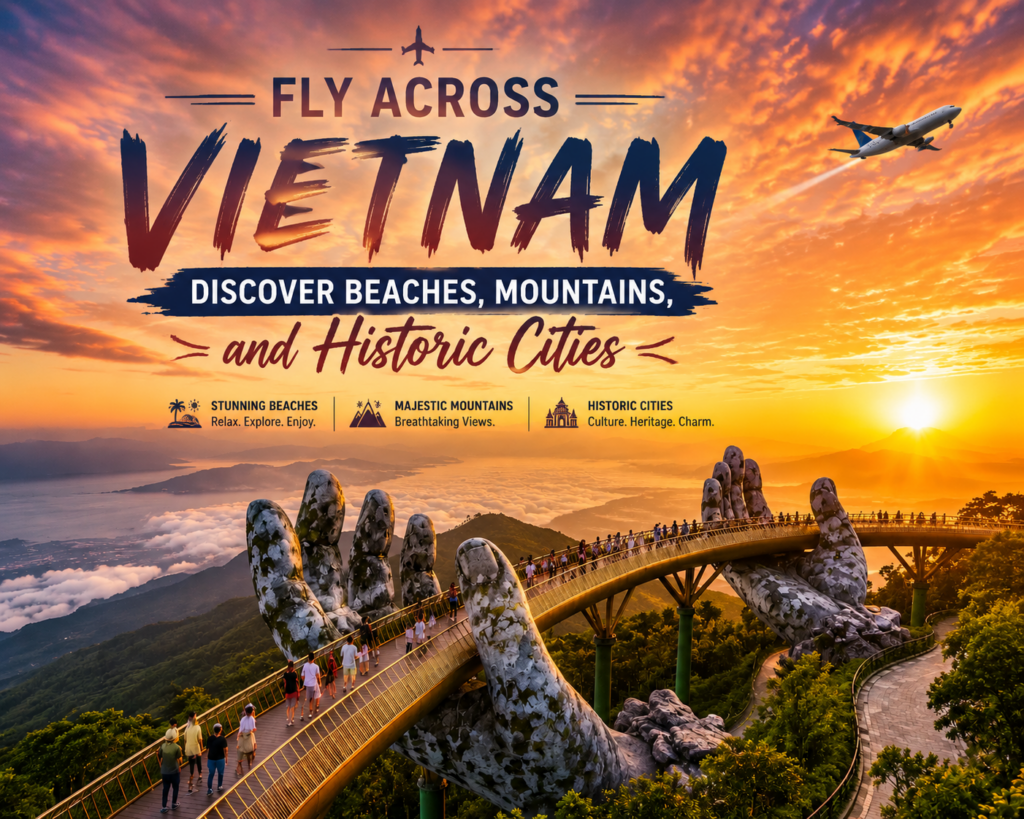
Vietnam is one of Southeast Asia’s most captivating destinations, offering this incredible mix of natural beauty, old history, lively cities, and really unforgettable cultural moments.
The country runs along the eastern coast of the Indochinese Peninsula, and it’s famous for emerald-green mountains, calm rice terraces, tropical shores, ancient temples, and yes, busy urban centres too.
Honestly, each region feels slightly different, so Vietnam ends up being the sort of place that can fit every kind of Traveller, not just one style.
Getting to Vietnam is also pretty straightforward, like it’s one of the easiest starts you can pick.
And then, domestic flights make moving between North central and south much simpler so visitors can see more of the country, with less time, even if the itinerary feels packed.
Vietnam is one of those destinations where centuries-old habits still sit right next to modern development. You can wander through old streets one day, Then cruise through stunning bays the next, then chill on tropical beaches, and by the end you’re in lively cities with amazing meals and locals who are genuinely welcoming.
The combination of varied landscapes and an efficient flight network is what makes it ideal for Travellers who want variety, and want it fast but without feeling rushed.
Hanoi, which is the capital, is kind of the place where many international visitors sort of end up first. You know, it’s famous for a charming Old Quarter, French colonial architecture, calm lakes, and this really deep cultural vibe. And because of all that, Hanoi feels like a really steady start to Vietnam, like the right opening section before you go further.
Walking around the Old Quarter feels a bit like you’re stepping back into time, except it’s not actually quiet. The narrow lanes sit next to traditional shops, little local cafes, markets and old historic buildings, all kind of packed together, yeah.
Hoan Kiem Lake sits pretty much in the center of the city, and it gives you this small calm pause from the commotion outside. Most people go there for morning wandering, evening downtime, and of course for those really pretty views of Ngoc Son Temple.
If you like history, you can wander into the Temple of Literature, which is among Vietnam’s oldest educational institutions, or you can go see the Ho Chi Minh Mausoleum and learn more about one of the country’s most important figures.
And you know, no trip to Hanoi is fully finished if you don’t try the local things, like pho, bun cha, spring rolls, and Vietnamese egg coffee. The food scene here is often called one of the best across Southeast Asia.
Getting in is also pretty easy. Hanoi’s Noi Bai International Airport connects smoothly to both domestic and international destinations, so it works well as a starting point for exploring northern Vietnam.
Then there’s Ha Long Bay, one of Vietnam’s biggest natural attractions. It’s famous for thousands of limestone islands rising from emerald-green waters, and it’s a UNESCO World Heritage Site that brings in visitors from every direction.
Most travellers tend to choose overnight cruises, so they can take in the bay slowly, fully. The boats slide between tall rock formations, hidden caves, little floating fishing villages, and quiet lagoons too. When sunrise or sunset brushes the calm water, the whole place feels unreal, kind like a remembered dream.
Kayaking through small caves, and then having a look at secluded beaches gives you a different angle. The gentle scenery, and the quiet atmosphere makes Ha Long Bay stay among Vietnam’s most photographed locations, even if you’ve already checked out a load of other places.
Central Vietnam shows visitors a more unusual side, not just the usual story. Da Nang has become one of Vietnam’s quickest rising tourist spots, mostly because of its attractive beaches, a modern city vibe, and a pretty practical location for getting around.
My Khe Beach stretches along the shoreline with soft white sand and clear blue water.
Travellers can chill in the sun, try water sports, or just stroll along the shoreline, collecting those ocean views like they mean something.
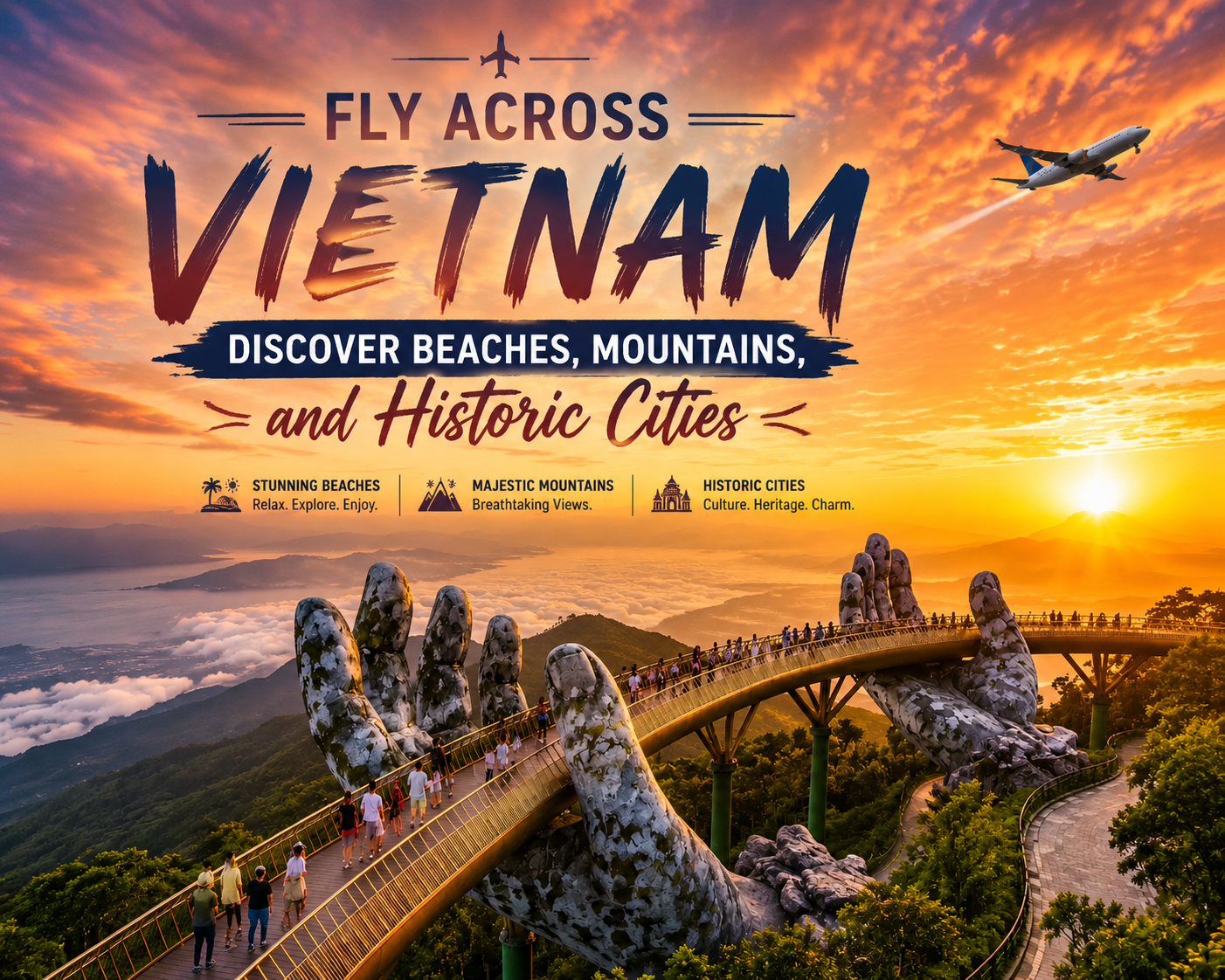
Then there’s the Golden Bridge which is easily one of Da Nang’s most recognized attractions. It’s held up by two massive stone hands and it gives you that jaw dropping feel with mountain scenery, this bridge has turned into a really iconic landmark for Vietnam.
Da Nang International Airport also helps a lot. It connects central Vietnam with major cities all across the country, so visitors can move between places without too much hassle, even if they’re trying to see more than one region.
And if you drive a bit from Da Nang, you’ll reach Hoi An one of Vietnam’s most lovely historic towns. The Ancient Town is still beautifully preserved and it shows traditional architecture, bright lanterns, riverside cafés, and centuries of cultural history, in a very calm way.
Evenings in Hoi An kind feel like something unreal. Thousands of lanterns light up the streets and it’s almost magical, visitors often drift through the local markets , then get a few custom pieces made by skilled tailors, and later taste real Vietnamese dishes in small family run restaurants, like it’s the most normal thing in the world.
If you want something slow and calming, take a boat ride along the Thu Bon River.
From the water the town looks peacefully quiet, and during the monthly lantern festivals it gets even more unforgettable, with glowing lanterns floating across the river like a hush, little celebration.
So yeah, Hoi An blends history, culture, and downtime into one place and honestly that’s why it keeps staying one of Vietnam’s most loved destinations.
Further south, Nha Trang kind of welcomes Travellers with lovely beaches, clear waters. It’s a coastal place, but still it feels quite lively, not too quiet, and the island tours help a lot, plus there is excellent diving for those who care about that sort of thing.
People can basically spend their days just unwinding on sandy stretches, snorkeling around bright coral reefs, or going on boat rides to nearby islands. Along the waterfront you’ll find fresh seafood spots in a row, serving local dishes while you look out at the ocean, it’s very simple but it really works.
Also, Nha Trang has hot springs, cultural attractions, and impressive temples that show the city’s different sides, like it’s not only about sea, you know.
Ho Chi Minh City is kind of a different scene, and it is also was called Saigon, back in the day. This is Vietnam’s largest city, plus it is its main economic hub. You can spot modern skyscrapers right next to older French colonial buildings, so the whole mix feels strangely seamless and a bit dramatic too.
You can’t really miss a few big names, like the Notre-Dame Cathedral Basilica, the Central Post Office, and Independence Palace.
If you have visitors who are into history, they usually go hunting for museums that lay out Vietnam’s past, step by step, or at least they attempt to.
Ben Thanh Market is still one of the city’s most crowded pulls. There travellers can pick up handicrafts, clothing, souvenirs, spices, and traditional foods, while you get this real, local energy all around you.
Then after sunset, the nightlife can be just as Intense.
Rooftop restaurants, cafés, entertainment areas, everything keeps a lively rhythm, so the evening doesn’t really slow down.
Tan Son Nhat International Airport is Vietnam’s busiest airport and it also acts as the main international gateway for the country.
For nature lovers, don’t skip Sapa in northern Vietnam. It’s surrounded by mountains and terraced rice fields, and Sapa delivers some of the most spectacular scenery in the whole region, it’s really something.
Visitors often trek through little villages where local ethnic communities still hold onto traditional ways of life. You will see colourful clothing, handmade crafts and that kind of warm hospitality that feels, kind of personal it gives real cultural moments not just photos.
The mountain scenery shifts in a beautiful way across the year.
During rice growing seasons, the terraces turn a lively green, but when it’s harvest time the hillsides are painted in gold toned shades. It’s like the whole landscape breathes, and changes mood.
Because the climate stays cooler, Sapa feels like a refreshing counterpoint compared to Vietnam’s tropical coastal zones. It’s different, calmer, and noticeably less humid too.
Another pretty notable stop is Phu Quoc Island. The island sits in the Gulf of Thailand and, it’s become one of Vietnam’s top beach picks. White, sandy beaches, crystal-clear waters, luxury resorts, and tropical forests all together kind of make this ideal place for a slow vacation, you know.
People often try snorkeling, diving, kayaking, or maybe just sit there and watch sunsets over the ocean, like nothing else actually matters.
Getting there is also easy, because Phu Quoc International Airport helps travellers reach the island fast from major Vietnamese cities.
Then there’s the Mekong Delta, which shows another special side of Vietnam. This area is often described as the country’s agricultural heartland, and it’s famous for a wide web of rivers, floating markets, fruit orchards, and calm villages that seem to float past you.
Boat tours make it simpler to move through narrow canals lined with thick greenery.
At the floating markets, visitors get a real view of everyday life, because local sellers bring fruits, vegetables, and handmade items right from their boats. You can feel the pace there, not hurried , just steady and kind of soothing.
And that unhurried tempo becomes a pleasant break from Vietnam’s busy city life.
Finally, Vietnam’s upland areas offer plenty of opportunities for outdoor fun. National parks, waterfalls, caves, and scenic hiking routes draw Travellers who enjoy exploring nature, step by step.
Phong Nha-Ke Bang National Park it seems holds some of the world’s largest caves, including Son Doong Cave which is kind an unbelievable natural marvel on Earth.
People can roam through subterranean rivers take in intense rock formations, and even step into forests that feel basically untouched, like nobody bothered them for a while.
Vietnam’s food culture is also, honestly one of the strongest highlights. Each region brings its own specialties so culinary discovery becomes a big deal during the whole trip. Travellers can sample pho, banh mi, fresh spring rolls, bun bo Hue, cao lau, grilled seafood, and really countless kinds of street food.
Local markets, plus family-owned eateries offer a more genuine kind of Dining it shows Vietnam’s long standing cooking traditions without sounding too staged.
Vietnamese coffee is famous too. Whether you get it hot or chilled, or it comes mixed with egg, coconut, or condensed milk, the coffee scene is woven into daily routines. It’s like part of the rhythm, not just a drink you order, then forget.
Going through Vietnam by air, can honestly help visitors reach more places, and well yeah it saves precious time, too. Domestic airlines tie together Hanoi, Da Nang, Ho Chi Minh City, Phu Quoc, Nha Trang, Hue, Can Tho and a few other areas, with frequent flights pretty much each day.
A traveler can drift around Hanoi’s historic streets, glide over Ha Long Bay, savour Hoi An nights when lantern glow shows up , relax on Da Nang beaches, dig into the Mekong Delta, and then finish on Phu Quoc Island, all in one trip that feels like a single breath, not a scattered set of days.
Vietnam keeps drawing Travellers in, because it provides this striking blend inside one country.
Historic towns, mountain views, tropical islands, quiet rural corners, and a vivid cultural rhythm end up connecting, and somehow it turns everything into memories you don’t forget.
Zipping across Vietnam, it feels like you crack open a little door to scenery that just sort of takes your breath away,and then suddenly there are these remarkable adventures too.
You start with the timeless mood of Hanoi and Hoi An, then you move on to the spectacular sights around Ha Long Bay, Sapa and Phu Quoc. Each place feels like it hands you another excuse, another small reason to believe Vietnam is one of Asia’s most rewarding travel destinations.
No matter if you are looking for history, or some real adventure, or maybe downtime and relaxation, cultural experiences, natural beauty Vietnam sort of delivers it all.
Expect an unforgettable trip, plus welcoming people, incredible landscapes, and those memories that linger long after your flight back home.