







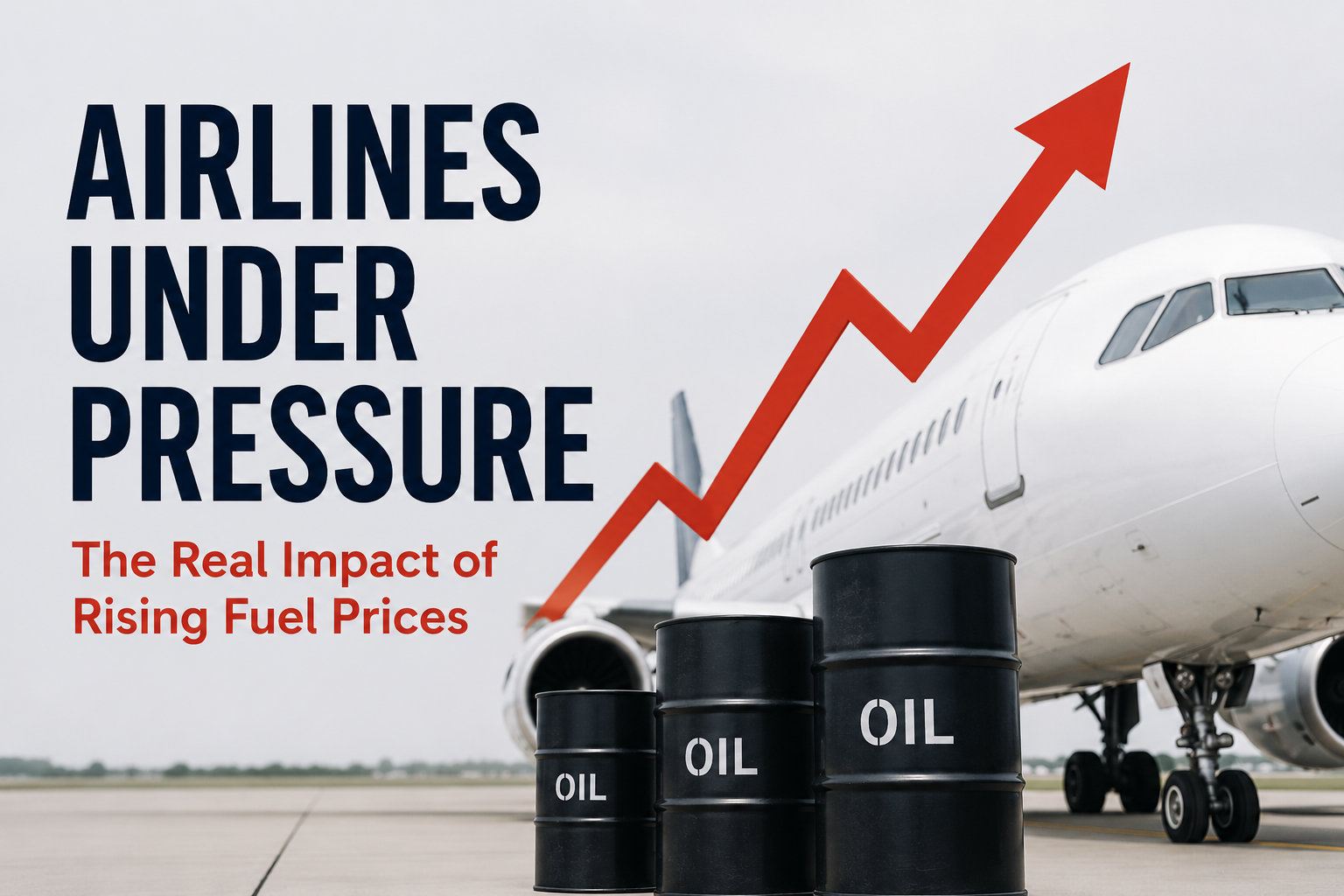
Airlines Under Pressure The Real Impact of Rising Fuel Prices
A passenger who browses flight discounts ends up viewing only the ultimate price.
42,000 to London. $980 to Dubai. €640 to Singapore.
The process remains straightforward.
The actual pricing process operates according to a financial system which depends on oil market prices from distant locations and which can change within a single day. One geopolitical tremor. One disrupted shipping lane. One refinery issue. The global aviation system starts to lose its balance.
Fuel has always mattered in aviation.
Now it dominates almost every conversation inside airline boardrooms.
In 2026, airlines are not engaged in competitive battles because their business exists as an ongoing fight against unpredictable market changes.
Fuel functions as the hidden force which determines how airlines operate their business today.
Most travelers think airlines revolve around aircraft.
Airlines operate through fuel as their main operational system.
Jet fuel costs represent one of the major operational expenses which airlines face globally because it can consume up to one third of their total operating expenses depending on their route structures and market conditions. When fuel prices climb aggressively, profit margins shrink with shocking speed.
Airlines lack the ability to cease their business activities until expense patterns return to normal, unlike hotels and retail establishments.
The system requires complete operational capacity because all components need to function simultaneously.
The explanation for unstable fuel prices stems from changed circumstances which render the traditional patterns of fuel prices ineffective. The fuel markets of 2026 show permanent conflicts which result from geopolitical factors and supply chain problems and refinery operational limits and shipment issues and international market fluctuations. The current military conflict in one area now affects all worldwide air transport systems.
Airlines prefer stable operating conditions more than they prefer to pay expensive fares.
Airline operators predict their expenses for the upcoming month but unanticipated fuel price increases within three weeks force them to modify their active flight routes and timetable operations and adjust their financial operations. The unpredictable situation makes it difficult for airlines to forecast their future operations because they need to rely on chance-based predictions.
Air travelers do not understand how airlines determine their ticket prices because they do not know about the underlying factors which cause price changes.
Passengers just want to understand the reason behind their ticket price increase.
Low-cost airfare options will soon become less available to travelers.
The era of extremely low-cost air travel has begun to face uncertainty during its present state.
Budget airlines achieved their rapid expansion by using operational efficiency and their capacity to operate aircraft at full capacity and their ability to complete flights quickly and their implementation of low-cost ticketing methods.
The airline business depends on fuel expenses which make up the majority of their operational costs.
When fuel prices experience sudden and extreme increases budget airlines must deal with difficult operational conflicts.
Airlines must decide between five different operational options.
The available choices for the project all seem to have negative aspects.
Passengers already express their dissatisfaction through complaints about baggage fees and narrow seats and insufficient space and the removal of complimentary services.
Airlines understand that passengers will remain loyal to their brand until they reach their maximum limit of dissatisfaction.
Customer sentiments do not affect mathematical calculations.
The airline industry needs to establish a method for dealing with their fuel expenses.
The initial stress of extended flights impacts all passenger routes. The impact on different routes varies from one route to another.International flights which operate between two continents need more fuel for their ultra-long-distance routes. The distance between Australia and Europe and North America and Asia and the Middle East and the Americas requires exact fuel calculations because even minor cost changes lead to major impacts across thousands of miles. Airlines need to perform detailed analysis of route profitability because their increasing need to calculate operational costs requires this information.
Fuel prices which have increased above last year fuel costs directly affect route profitability for airlines.
Airlines implement their changes without announcing them to the public.
Airlines notify passengers about flight changes which include reduction of flights and replacement of aircraft and temporary suspension of direct flights. When all direct flights to a destination stop existing passengers assume that airlines have reduced their operations because of lower demand.
The environmental debate became unavoidable The environmental debate became unavoidable
Fuel prices don’t exist separately from climate discussions anymore.The aviation industry needs to cut its emissions while maintaining its worldwide growth operations. Airlines need to stop making travel expensive for passengers because environmental organizations and government bodies and passengers now demand eco-friendly practices from air travel companies.
The task requires an impossible degree of work. Sustainable aviation fuel known as SAF has emerged as the most promising solution for the aviation industry. Airlines keep investing in SAF partnerships because these partnerships lower all emissions throughout their operational life compared to standard jet fuel.
SAF remains costly to buy in most regions according to the present situation.
Airlines now face a strange contradiction. Airlines need to decrease their environmental influence but their operational fuel expenses keep increasing. The aviation industry has technologies for cleaner operations but organizations need to spend massive amounts of money before they can implement these methods worldwide.
Major Gulf airlines still maintain their operational advantages over their competitors.
Gulf airlines face different fuel pressure challenges because different airlines experience fuel pressure conditions differently. The three large Gulf carriers which operate Emirates and Qatar Airways and Etihad Airways use their operational size and their government support and their geographic advantages and their operational processes to handle fuel price fluctuations better than other airlines.
Their global hub systems help consolidate massive passenger traffic flows through centralized airports like Dubai and Doha. The network structure provides operational flexibility which smaller carriers do not possess.
Gulf airlines understand fuel efficiency because they have developed expertise in this area. The combination of modern fleets and newer aircraft and improved routing and advanced logistics systems reduces waste to the maximum extent possible. The largest airlines in the industry experience operational challenges when fuel prices show sustained instability.
Fuel economics affect every industry participant without exception.
The Indian aviation industry faces its most recent obstacles at this time.
The Indian aviation market continues to experience high growth because new airports begin service and passenger traffic increases and regional air routes expand. Airlines compete aggressively for market share across one of the world’s fastest-growing travel sectors, That growth creates opportunit, It also creates vulnerability.
Indian airlines operate in markets where price sensitivity prevails because passengers tend to compare prices before making flight reservations. Airlines face intense pressure from rising fuel expenses which jeopardize their ability to provide affordable domestic services while maintaining profitability.
Some carriers handle their costs until they become uncompetitive in the market.Some companies add fuel surcharges to their operations without making public announcements about it.
Companies need to treat operational efficiency as an essential requirement for business survival instead of using it to boost their business performance.
The global energy market developments create an especially damaging impact on India because the country depends on oil imports.
The airline industry uses technology to achieve better operational efficiency. Airports depend on data-driven systems which enable airlines to use advanced software tools for route optimization and fuel consumption reduction and maintenance planning and weight assessment operations. The entire worldwide aircraft fleet achieves significant benefits from even minor efficiency enhancements.
Every aspect requires evaluation because airlines face increased costs when fuel prices increase. Airlines use artificial intelligence systems to forecast fuel usage based on weather conditions and traffic patterns and flight paths. The passenger window creates an impression of eternal skies. Mathematical calculations transformed aviation operations into a precise science. Passengers experience indirect effects from all operational changes. Most travelers never study oil markets,They still experience the consequences.
The initial increase in ticket costs leads to subsequent restrictions on baggage and reduction of free services and establishment of narrower seat arrangements and decrease in available flight routes and tightening of rules for flight changes. The changes maintain a deceptive quality because they make everything different from before. A free snack disappears, Seat selection suddenly costs extra, A once-daily route now operates four times weekly instead.
The flying experience undergoes gradual transformation because of operational demands. Passengers direct all their complaints towards airlines because they believe that airlines are responsible for making their travel experiences worse. Sometimes the criticism is fair.
The costs continue to rise because geopolitical conflicts keep multiplying.
Fuel prices experience their greatest price swings when multiple factors cause market disruptions.
The situation becomes worse because political unrest leads to increased production costs.
Aviation fuel markets experience direct and indirect effects from conflict zones, sanctions, disrupted trade routes, military escalations, and regional tensions. International airlines need to track geopolitical changes because any major event can transform their entire operating environment.
The implementation of airspace restrictions creates extra difficulties for pilots.
Flight duration increases when airlines need to avoid specific areas because of safety concerns.
Airlines must operate their flights at longer distances which results in higher fuel consumption.
Airlines need to pay higher operational costs because they need to purchase additional fuel which costs more.
Passengers end up paying for all increased operational costs that airlines face.
The process creates a fast spreading chain reaction which starts from one point.
The international nature of aviation operations means that any regional unrest will disrupt airline services throughout the world.
Aircraft manufacturers need to meet growing demands from their customers who want fuel-efficient aircraft.
The increasing price of fuel requires aircraft manufacturing to change its fundamental design processes.
Airline companies want to purchase highly efficient planes which will enable them to decrease their fuel consumption during extended flight operations.
Boeing and Airbus must prepare their upcoming aircraft systems according to market demands which will determine success for their future operations.
Aviation fuel efficiency emerged as the most valuable marketing element for airlines.
Airlines prefer to operate the Airbus A350 and Boeing 787 because these modern aircraft achieve reduced fuel consumption while providing excellent long-distance flight capabilities.
Airlines that want to replace their old aircraft will choose their new planes based on operational efficiency benefits which outrank all other factors.
Fuel efficiency exists as the central factor which customers will choose between different products.
Economic conditions experience their strongest fluctuations during times of economic instability.
Electric aircraft still need more development work before they can achieve their first major flight test.
People enjoy discussing electric aviation technology.
The situation becomes more complex than it appears.
The small electric aircraft show continuous technological improvement, which benefits both short regional flights and experimental urban mobility programs. The commercial aviation industry still needs to solve fundamental technical problems because electric engines require batteries that exceed weight limits and need better power storage capacity and better charging facilities and extended flying distances.
Fueling the entire aviation industry today with conventional jet fuel means that airlines will continue to rely on traditional fuel sources throughout 2026.
Airlines will continue to face financial risks from unstable oil price fluctuations until the end of their business operations.
Airlines will move toward sustainable aviation practices through an extended process that will take time to complete.
The actual situation requires a slower approach than current optimistic projections show.
Airlines experienced changing financial results because of business traveler patterns.
Airlines used to earn their most profitable income from corporate travelers who paid for premium tickets at high rates.
The typical work environment changed because people started working remotely from their homes.
Business travel has partly come back to existence, but companies now check their travel expenses with more detailed assessment methods. Virtual meetings reduced some corporate demand permanently, especially for shorter trips.
Airlines use premium business travelers to help cover their operational costs which include expenses from fuel price increases.
Airlines now need to rely more on customers who travel for leisure because they lack stable access to high-value business travelers who will pay premium airfare prices.
Rising fuel expenses create additional financial difficulties for businesses because they need to raise their operational costs again.
The process of flying now has different emotional aspects than it had in past times.
Passengers can perceive the increased tension which exists between them although they lack complete knowledge about the financial situation between both parties.
Cabins now express more crowding because more passengers fill the planes which leads to more difficult travel schedules while delays become more extensive through the system overload.
People experience excitement from air travel but they also observe that the system operates on a delicate balance which could break at any time.
Passengers at airports currently choose their flights according to their importance to their travel needs.
Travelers evaluate their experiences with different services which they can access through online platforms. Social media platforms allow one negative customer review to reach thousands of potential buyers within a few hours.
Airlines need to solve an unusual problem which will appear in 2026.
The company needs to reduce its spending while maintaining all aspects of the travel experience which they have established.
What will occur after this point?
The current fuel pressure situation will continue to exist for the foreseeable future.
Airlines will use technology advancements together with route optimization strategies and sustainable fuel development and fleet upgrades and data-based operational improvements to adapt their operations.
Ticket prices will show price fluctuations because airlines will adjust their rates based on changing fuel prices and worldwide travel requirements.
Passengers will have to modify their travel expectations according to their requirements.
Certain flight routes will see a decrease in availability for ultra-low cost air travel.
Travelers will benefit from new travel options which will develop after they use flexible travel scheduling methods.
The costs of sustainable air travel will reach higher levels until the development of cleaner technologies reaches their operational capacity.
People will continue to use airplanes for their travel needs, which will remain unchanged.
Families will reunite across continents. Tourists will chase unfamiliar skylines. Business travelers will rush through terminals clutching laptops and coffee cups.
Aircraft will keep taking off into busy air space even though expenses have increased and uncertainties have multiplied.
Modern aviation requires more operational power than just its fuel resources.
The world keeps progressing forward without any signs of stopping its momentum.