






Morocco is kind of a place where each travel day feels like you step into another little universe, even if you are just moving a short distance.
You get these lively, ancient cities with crowded, colour saturated markets, then later you are facing long stretches of golden dunes, some rugged peaks, and quiet Atlantic shorelines that look almost painted.
There’s this mix of culture, history and nature that just keeps surprising you.
It kind of sits right at the meeting point of Europe and Africa, so it has become one of the more compelling travel spots in the entire world. No matter if you’re into architecture everyday local customs, bold exploration, or slow coastal downtime, Morocco somehow leaves you with a memory that you can’t really shake.
Getting to Morocco by plane is usually the easiest start. Larger international airports in Casablanca, Marrakech, Rabat, Fes, Agadir, and Tangier link the country up with Europe, the Middle East, North America, and parts of Africa.
And if you want to hop between regions fast, domestic flights help a lot. That means you get to see Morocco’s varied scenery, without spending hours stuck on the road, which is honestly a gift when your schedule is tight.
In Morocco, every place seems to whisper a new story. One day you are strolling through old medinas, surrounded by handmade items and narrow lanes that go on forever, and then the next day you are riding a camel across the Sahara Desert or trying fresh seafood by the Atlantic.
That kind of variety, it makes Morocco feel rewarding, like you’re continuously collecting experiences that fit together but also surprise you.
Casablanca is often the first stop when international visitors land. It’s Morocco’s biggest city and also its commercial centre so you’ll notice a blend of modern design with historic reminders. Broad boulevards, upscale hotels, shopping spots, and oceanfront cafés all create this energetic mood, and it can feel strangely different from many other Moroccan cities, not only in pace but in that whole overall vibe.
Honestly the city’s most famous spot is the Hassan II Mosque it is one of the largest and just very impressive mosques anywhere around the planet.
It was built right beside the Atlantic Ocean so the huge minaret sort of takes over the skyline and it, sort of greets visitors with incredible craftsmanship, complex mosaics and a kind of breathtaking architecture you can’t really forget.
Then there is the Corniche waterfront, another place people always try to see.
Travellers can do easy walks along the coast, eat at seaside restaurants, or just sit and watch the sunset over the Atlantic Ocean. On top of that, Casablanca is basically Morocco’s main transportation hub which makes it convenient to keep going with a domestic flight to other regions, later.
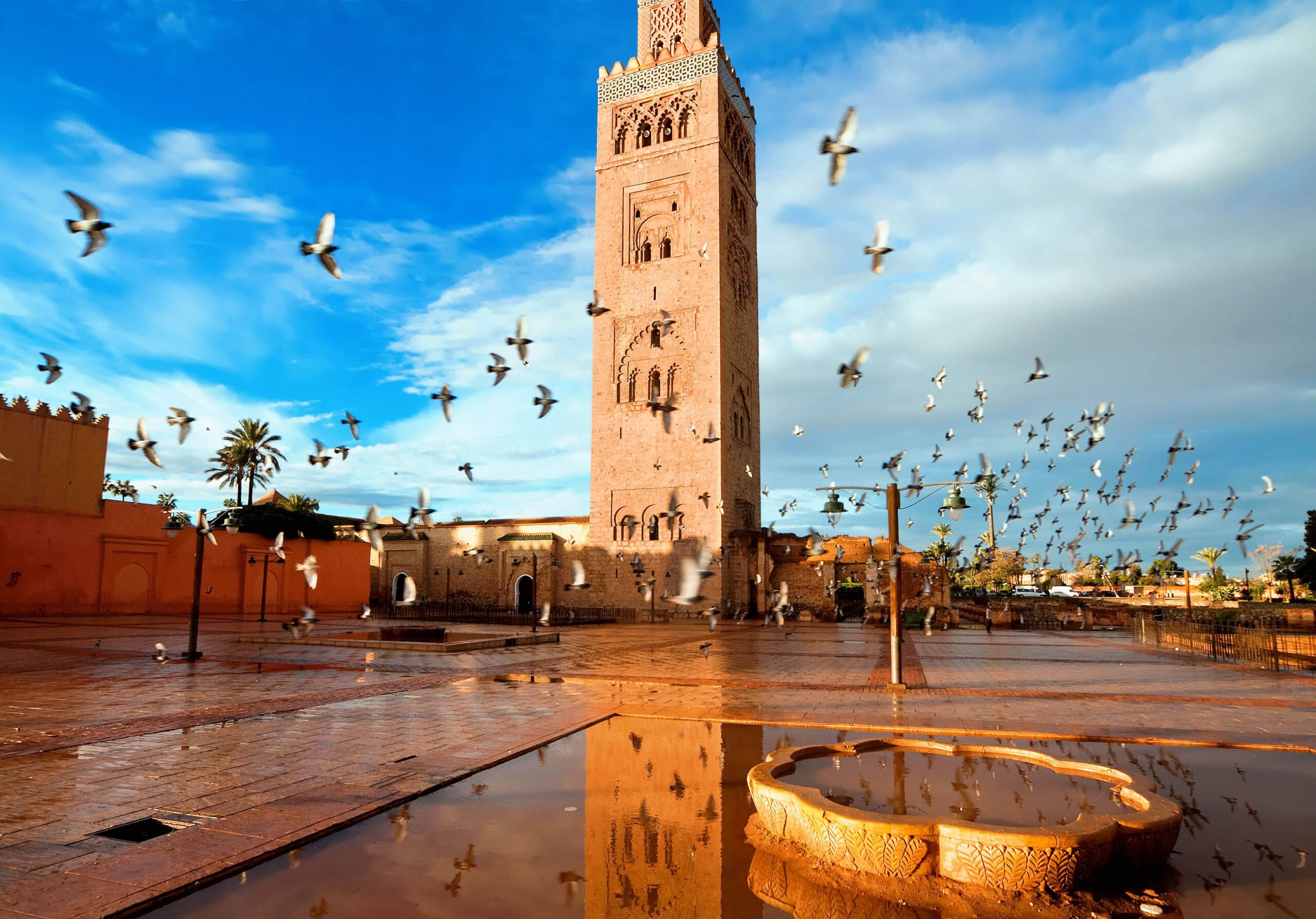
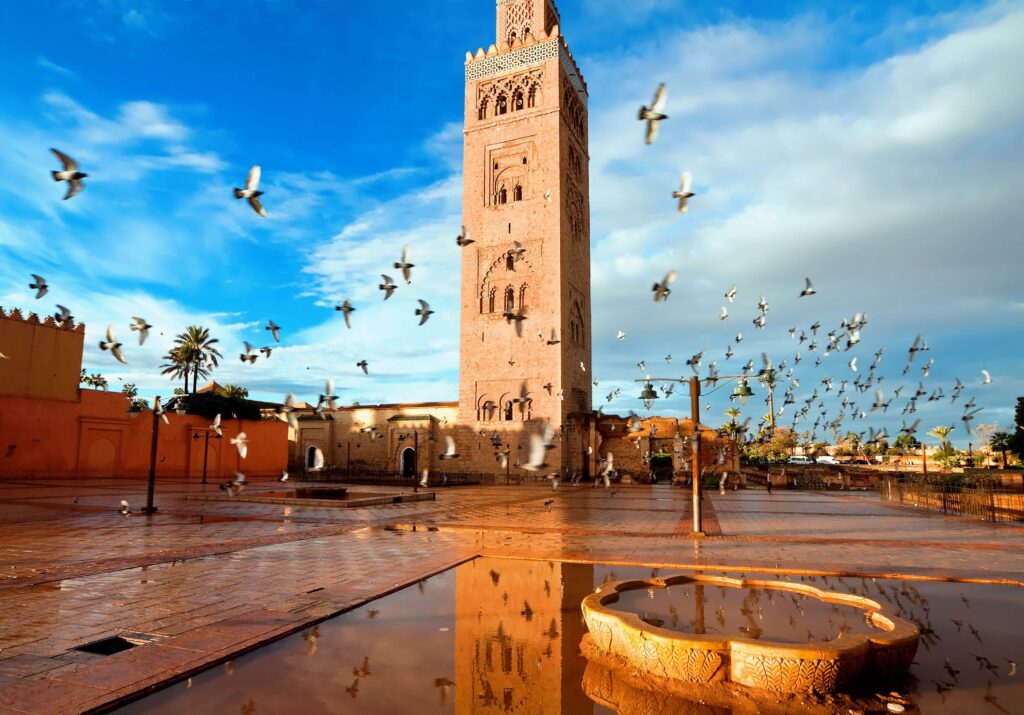
But Marrakech really feels, kind different, almost immediately. People call it the Red City, because the sandstone there has this distinctive warm tone. And yeah, Marrakech is also famous for a lively kind of mood, vibrant markets, historic palaces and even lovely gardens that slow your heartbeat down a bit.
Right in the middle, Jemaa el-Fnaa Square is where you end up sooner or later. There you’ll see storytellers, musicians, food vendors and local performers all together, blending everything in a way that sticks with you, from morning right through to late night, no pause.
Every visit seems slightly different, because the square keeps changing all throughout the day.
Walking through Marrakech’s ancient medina is another whole thing. The streets are narrow, and they’re packed with those traditional shops selling carpets, leather goods, spices, lanterns, ceramics and small, handcrafted souvenirs you didn’t even know you wanted.
And the city’s famous souks still give you endless chances to soak up Moroccan culture, while you’re also shopping for those rare treasures that feel personal, like they picked you out.
And if you want more places, visitors can also explore Bahia Palace, the Saadian Tombs, and the quieter Majorelle Garden, which is like a refreshing detour from the busy streets. Marrakech Menara Airport ties travellers into domestic as well as international destinations, so it ends up being one of Morocco’s busier airports too.
Fes is kind viewed as Morocco’s cultural and spiritual center, you know that feeling like it’s the beating heart. It houses one of the world’s oldest universities, and somehow the city kept its traditional vibe for centuries, even when everything else changed.
The Medina of Fes is a UNESCO World Heritage Site, it also stays one of the largest car-free urban areas anywhere across the world.
When you walk through those winding alleyways, it feels like you’re time traveling, back in time, just like that… Traditional workshops, local souks, mosques, and historic colleges still function pretty much the same way they did for generations, sometimes you’ll even see the same little routines repeating.
One of Fes’s most well-known sights is the Chouara Tannery, where leather is still processed using techniques that are as old as time, or close enough. People can watch the artisans working, while also taking in broad views from nearby terraces.
And then there’s Fes in general, it’s famous for Islamic architecture that looks almost unreal, artisan craftsmanship, and that welcoming, easygoing atmosphere. Also, getting there is straightforward because domestic flights link the city with Casablanca and other major hubs, so it’s not such a hassle.
Tangier, though, sits right where the Atlantic Ocean and the Mediterranean Sea kind meet together.
For centuries this place has worked like a passageway between Africa and Europe, so you get this distinct mix of cultures, layered and overlapping in a way that’s hard to forget.
That historic Kasbah, it sort of leans over the coastline, and you get these wild views heading toward the Strait of Gibraltar, like wow.
Visitors can wander around in the quaint streets and pop into tiny museums then just, chill in cafés that feel practically above the water, somehow.
Tangier’s beaches are a magnet for anyone wanting some downtime, and not far away, near-by Cape Spartel marks the place where two great bodies of water meet up. Also the city’s modern airport makes it pretty easy to arrive, especially if you’re aiming to explore northern Morocco, at a slower rhythm.
And lastly, Chefchaouen has become one of Morocco’s most snapped, photographed spots. People call it the Blue Pearl of Morocco, and this mountain town is well known for streets, houses, and even stairways that are painted blue—bright in that quiet way. t’s pretty much a visual charm, a calm kind of magic.
Walking through Chefchaouen feels peaceful, relaxing too. Colourful flowerpots, artisan shops, rooftop cafés, and mountain views kind all blend together into this unforgettable vibe.
Photographers especially love the city’s odd but beautiful look, while travellers seem happy just browsing handmade textiles, pottery, and traditional crafts.
Getting to Chefchaouen is often a road journey from nearby airports so yeah, there’s effort involved… but it’s still well worth the trouble.
Honestly, one of Morocco’s biggest adventures starts out in the Sahara Desert. Those massive, golden dunes near Merzouga pull in visitors who are after that unforgettable desert vibe, you know. Camel rides across the sand dunes let you feel the vastness of the desert in a way somewhat like old traders did, back when everything moved slower. And then sleeping over in a traditional desert camp, with a sky full of endless stars, is still one of Morocco’s most lasting travel memories, for real.
When sunrise and sunset show up the dunes change into shifting shades of gold orange, and red, so the scenery ends up looking almost endless. A good number of travellers also blend flights into nearby cities with guided excursions, trying to get to the Sahara faster and with less hassle, which sounds nice on paper.
Then Agadir shows a completely different face of Morocco. It sits along the Atlantic coast, and the city is known for long sandy beaches, a warm climate, and this easygoing atmosphere.
Visitors can swim, surf, stop by seaside cafés, and get fresh seafood from restaurants right by the ocean. Agadir also has a modern marina and a beachfront promenade that really set you up for slow, leisurely evenings.
Plus, Agadir works great as a starting point for exploring nearby fishing villages, natural parks, and those scenic coastal routes that keep turning into surprise views.
Essaouira is, like a quiet coastal treasure, well known for its creative vibe and historic flavour, it sort of feels artistic even before you reach the main streets. The city’s fortified medina sits over the Atlantic Ocean, and you’ll notice the whitewashed buildings, with those crisp bright blue doors and windows, everywhere.
People usually walk along the harbour, take in the daily rhythm, and watch local fishermen bring in their catch… then wander into little art galleries where Moroccan artists keep showing their work.
And yes, the wind matters a lot here. Strong Atlantic winds make Essaouira one of the country’s top places for windsurfing and kitesurfing, because you can actually feel the breeze doing its job.
At the same time seafood lovers seem happy too, since the local cuisine leans on fresh ingredients that taste like they came from the sea just minutes ago.
But if you want something a bit different, Morocco’s Atlas Mountains are a whole different mood. They stretch across much of the country and bring spectacular landscapes, traditional Berber villages, hiking routes, and those really stunning lookouts.
Visitors can explore mountain valleys, waterfalls, and calm villages where local customs stay pretty much the same as they did for generations, sometimes you even hear the same rhythms, the same stories.
In winter, some areas get snowfall and it changes everything, the scenery looks nothing like Morocco’s deserts or beaches.
The Ouzoud Waterfalls are also a major highlight, and many people would say they belong among Morocco’s most beautiful natural spots. Wrapped in lush greenery, the cascades look impressive up close, and they’re great for hiking, taking photos, and doing relaxed boat rides near the falls, like you’re in the middle of the landscape not just visiting it.
Meanwhile, Morocco’s coastline keeps surprising, people still talk about it, like it was a small secret that no one can quite hold onto. Along both the Atlantic Ocean and the Mediterranean Sea travellers end up finding quiet beaches, sharp, dramatic cliffs and also those little fishing towns that feel tucked in around the shore, almost like they belong there.
And honestly, food is a huge part of why visitors sort of stay longer. Traditional dishes blend fresh produce with aromatic spices and somehow the flavors land differently, in a way you really don’t get anywhere else in the world.
Tagine still feels like one of Morocco’s signature dishes, it ’s cooked slowly with meat, vegetables, herbs and spices all inside that clay pot, the one you can recognize from a distance. Then there’s couscous, grilled meats, fresh seafood and yeah, those bold salads that you see on tables everywhere across the country.
On street markets you can spot freshly baked bread, olives, pastries, mint tea and those small sweet bites, the kind that basically echo Morocco’s deep culinary heritage. In real life, every meal turns into part of the whole journey, it’s not really optional at all, you just fall into it.
Many of these pieces are made by local artisans, using skills passed down through generations, not quick made, more like carefully done.
Travellers also usually notice the bargaining vibe is pretty friendly, especially when buying souvenirs Also, if you travel through Morocco by air, bouncing between places becomes a lot less complicated. Domestic airlines link Casablanca, Marrakech, Rabat, Fes, Tangier, Agadir, Ouarzazate, plus quite a few other cities, with regular flights.that somehow manage to carry Morocco’s artistic identity without feeling forced.
So instead of losing many hours on the road between far-off regions, visitors can fly comfortably and basically stretch their holiday, better. For example, a traveller can start in Casablanca, keep going to Marrakech, explore Fes, drop by Chefchaouen, unwind in Agadir, then wrap it up with a Sahara Desert experience that stays in memory for a long time, during one well-planned trip.
Morocco’s hospitality adds even more to the whole thing.
Guests are often met with warm smiles and traditional mint tea, and somehow it builds real connections with the local communities. The country’s mix of Arab, Berber, African, and European influences gives every destination its own vibe, yet everything still shares a sense of tradition.
Traveling across Morocco by air kind of opens up this whole door, to ancient cities, magnificent deserts, dramatic mountains, beautiful beaches, and those unforgettable cultural moments.
You land and suddenly it feels like the vibrant streets of Marrakech are right there, then Fes with its historic charm, and somewhere in between the blue little lanes of Chefchaouen, plus the golden dunes of the Sahara. Each place has something remarkable, in its own way, not the same sort of “story” twice.
So if you’re really after adventure, or old-world history, or photography, or just local cuisine that tastes way better than it should. Or you want calmer, quieter views, Morocco still does that thing where it pulls you in.
The journey is packed with colour, tradition, and breathtaking scenery. And because the flight connections are solid, plus there’s a huge variety of attractions, Morocco stays one of the most exciting travel destinations for anyone ready to explore the beauty of North Africa.