




Dubai used to be a pretty small trading center, but somehow it’s turned into one of the most exciting travel spots around.
People talk about it because of the futuristic skyline, the kind of luxury that feels almost unreal, the desert scenery, and also the cultural things to see. Every year the city pulls in millions of visitors, and it doesn’t feel accidental.
What’s even more impressive is how easy it is to move beyond just Dubai, and explore the wider Emirates too, thanks to an extensive air travel network that’s always running.
Flying, honestly, has become one of the best ways to really experience the United Arab Emirates. The modern airports connect travellers to well known cities, breezy coastal getaways, desert adventures, and those lesser noticed cultural treasures, all within a short distance.
A trip that might drag on for hours by road can often be done much faster by air , and that means visitors have extra time to actually experience more, instead of just commuting.
For many international travellers, Dubai is kind the first stop, and everything begins before they even leave the airport, like before the trip really starts.
Dubai International Airport is one of the busiest aviation hubs on earth, bringing passengers from almost every continent. It feels almost like the city, modern and very effective, as if it was designed for motion, fast routes, and for dealing with travellers from everywhere, at once.
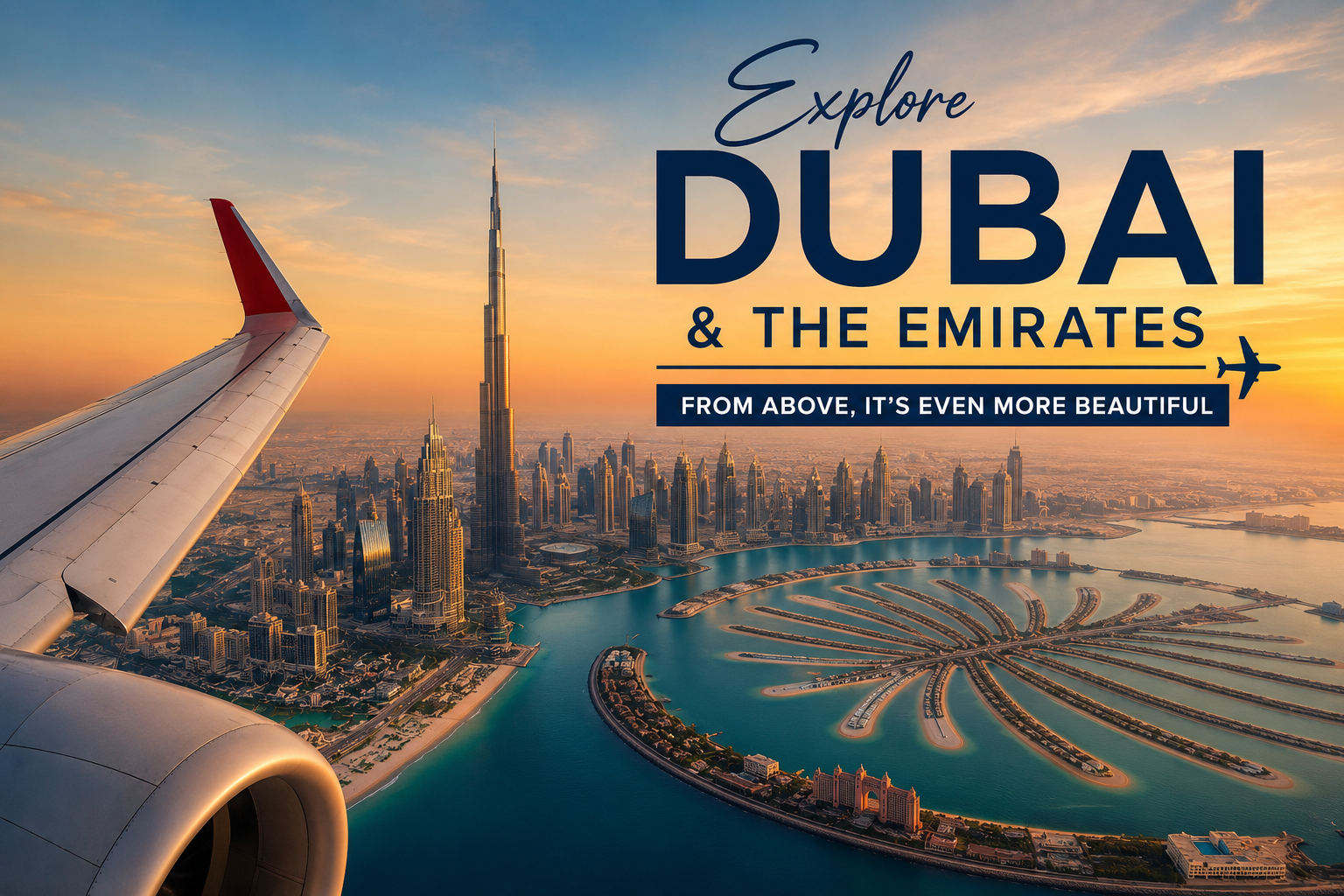
After landing, the famous skyline grabs attention right away. Dubai has become sort of synonymous with pushing architectural limits and playful design choices.
The Burj Khalifa, which is the tallest building in the world, works as a clear symbol of the city’s ambition.
Visitors can head up to the observation decks, and then enjoy those breathtaking views that stretch over the city, the coastline, and even into the surrounding desert.
Around Burj Khalifa, the area is really worth wandering, there’s lot of things to see even if you sort of rush.
Dubai Mall pulls in shoppers and tourists, it has thousands of stores, plus entertainment options, restaurants, and plenty of attractions that keep people moving.
In the evenings the Dubai Fountain does those big water shows, and suddenly everyone just gathers, like music lights, and movement blend together into one of those you have to see it moments.
But Dubai’s charm doesn’t stop at the shiny new stuff.
There are also important pieces of history and culture kept close, almost like the city refuses to forget itself.
The Al Fahidi Historical Neighbourhood gives you a real glimpse into old Dubai, with its traditional architecture, those tight lanes, little museums, and all sorts of cultural experiences kind of everywhere.
When you walk through it, you start to sense how Dubai went from a small coastal community into a global city, not all at once, but step by step, year after year, and honestly, if that makes any sense. Also, one of the best ways to feel the more natural side is a desert adventure, really just that kind of outing.
Right outside the city limits, everything changes. Golden sand dunes go on toward the horizon, and it makes this calm contrast to the busy urban noise. Visitors often do desert safaris, take dune drives, try traditional meals, and catch sunset views that show another face of the Emirates.
And then there’s the coastline, which adds yet another layer to the whole trip. Dubai offers lovely beaches, luxury resorts, and water activities for travellers who want relaxing time as well as more adventure.
Palm Jumeirah, probably one of the city’s most recognizable developments, shows how Dubai can build something extraordinary.
That man made island holds hotels, restaurants, and attractions, all around it the water looks so clear and blue it almost doesn’t seen real.
While Dubai often gets the most attention, the other Emirates also bring really memorable moments.
When you fly or travel between these regions, it’s kind of easier to see a more complete picture of the UAE, like in a fuller way not just one stop, or only one area at a time.
Abu Dhabi, being the capital of the United Arab Emirates, feels different from Dubai right away. The city mixes modern growth with cultural heritage and it also shares a few of the country’s most significant landmarks, so it’s not just the scenery.
The Sheikh Zayed Grand Mosque still stands out as one of the most impressive architectural attractions around here. Its detailed design, massive structure, and calm surroundings make it a must see place, honestly, even for people who aren’t mosque people.
Abu Dhabi also draws visitors through its islands, museums, and entertainment attractions.
Yes Island has grown into a big tourism hub, with theme parks, entertainment venues, and international events all together.
Travellers can experience everything from fast-paced rides to relaxed waterfront dining, which sounds simple but it actually feels very different once you’re there.
Sharjah gives another look on Emirati culture, it ’s kind of quite often called the cultural capital of the UAE. And honestly it picks up a lot about art, history, learning, and heritage, in like a more patient way.
Compared with Dubai, Sharjah feels quieter, even so there still isn’t a shortage of things to do. People can just walk through museums traditional souks and cultural centers, all of them showing the region’s past, step by step, no rush.
Sharjah Museum of Islamic Civilization is, like, one of the city’s most popular spots. It shows thousands of artifacts and somehow manages to give you a real look at the scientific, artistic, and cultural wins of Islamic civilizations across time.
If travellers want to get a grip on the UAE, not only that shiny, modern picture, a lot of people eventually end up finding Sharjah kind of rewarding, like oh wow i didnt expect this in that way.
Ajman, which is the tiniest Emirate, also gives you a more unhurried seaside feel.
The beaches and waterfront areas, plus the traditional markets, tend to slow things down for visitors. Ajman is also famous for its historic fort it pretty much explains the story of the region’s past before the whole rapid development of the modern UAE took over.
For folks chasing that natural kind of beauty, Ras Al Khaimah is getting more and more attention, lately
In the northern region of the country, the Emirate sort of braids mountains with coastal beaches and desert scenery into one overall scene, a bit like it’s all tangled on purpose.
The Hajar Mountains, they act as this dramatic backdrop, and they quietly bring in travellers who are looking for hiking, open-air thrills, and overlooks that really make you pause for a minute, or maybe two, before you move on.
Jebel Jais, as the UAE’s highest mountain peak goes, is one of Ras Al Khaimah’s major draws. The area has amazing viewpoints and adventure activities, including one of the longest zip lines anywhere in the world.
Honestly the mountain environment feels totally different from the city landscapes you’d associate with Dubai and Abu Dhabi.
Fujairah gives a sort of different, experience, mostly because it is on the eastern coast. Unlike most of the UAE, which looks toward the Arabian Gulf, Fujairah kind of sits by the Gulf of Oman.
This location call pretty much gives the area lovely beaches, clear waters, and plenty of chances for diving, and also snorkelling, if it is your thing.
The Emirate is also known for its historic places, like forts and those older style villages. A lot of visitors end up really enjoying Fujairah because it feels like it has natural charm together with cultural things. Basically, it’s a calm detour for travellers who want to see, uh, a different side of the UAE.
Umm Al Quwain still stays one of the less talked about Emirates, so it can be appealing if someone wants quieter stops.
There are mangroves, beaches, and a bunch of outdoor options like kayaking plus wildlife looking. The whole vibe there is more relaxed, so it feels like a contrast, to that fast paced rush you get in Dubai.
One of the main benefits of exploring the Emirates is the sheer variety you can find pretty close together, geographically speaking.
Travellers can do high end shopping in Dubai, catch cultural attractions in Sharjah, grab mountain thrills in Ras Al Khaimah, and then go beach side time in Fujairah without having to trek too far around.
Air travel really matters for connecting the UAE to the rest of the world, and yeah it changes a lot.
Dubai and Abu Dhabi act as major international aviation hubs so travellers can get to the country from Asia , Europe, Africa, and the Americas with less hassle overall.
Airlines keep adding routes, which makes the Emirates even easier to reach for people arriving from outside.
Also the rise of aviation has reshaped how people experience the region, more or less.
Nowadays, a lot of travellers use the UAE like a launch pad to stitch together multiple destinations. Like, someone might touch down in Dubai, wander for a few days, then shift to Abu Dhabi or another Emirate, before taking a fresh flight onward to yet another country.
Dubai airline industry has sort of, played a huge part in how the city got known all around the world. With lots of regular international flights coming in and out, Dubai has been reshaped into a place people go for business and also for tourism.
Travellers seem to like the whole thing, like easy connecting flights, sleek aircraft, and airport facilities that feel genuinely top level.
But it’s not just visitors coming through. Aviation, in general, has affected the wider UAE economy too. Airports, airlines, hotels, restaurants and even entertainment venues have expanded as more international visitors arrive.
The UAE also keeps investing in infrastructure, to handle the travel demand that’s expected to grow later on.
And then there is food. That is another major reason many travellers end up enjoying exploring Dubai and the wider Emirates. The area gives a blend of traditional Emirati cuisine and international flavours, so visitors can jump between worlds.
You might taste local favourites like mach boos, grilled meats, dates, and sweet Arabic desserts , while also finding restaurants that bring in dishes from all over the globe.
Dubai in particular has become kind of legendary for dining. There are luxury restaurants with skyline views, and on the other hand you can find casual street food experiences.
In other words, the city keeps options open for nearly every travellers style. Food markets and cultural neighbourhoods help people uncover real flavours, that go beyond the fancy high end dining image people sometimes expect.
Shopping still stays a big part of the UAE travel routine. Dubai’s malls are well known worldwide, but traditional markets still matter a lot.
Gold souks, spice markets and local shops give experiences that feel tied to the region’s past, even if you’re just passing through for a few days.
The UAE also pulls in visitors with big events, festivals through the year, it kind of creates this constant buzz.
You’ll see international exhibitions concerts, sporting meets and cultural celebrations, all bringing people in from everywhere.
And honestly these happening at different moments, give travellers another excuse to schedule a trip for various seasons too.
For exploring Dubai and the Emirates, the safe choice is typically the cooler months, when being outside feels much more pleasant. Think desert getaways mixed with walking tours, and later beach moments, so during this time travellers can take in more of what the region actually offers.
Technology has changed the whole travel feel here, not just a little. Digital services, smart airports, online booking systems, and upgraded transportation choices make the journey smoother, simpler in a way.
Guests can pass through terminals faster, reserve attractions, and wander around cities with extra convenience, instead of getting stuck in too much planning.
Another highlight is public transit in Dubai, it sort of connects major parts of the city with the metro so visitors can get to attractions without relying only on taxis or private rides, you know.
These modern transit options show how the UAE is slowly leaning into building a more efficient city experience day by day, really.
Looking ahead, tourism in the Emirates keeps expanding. Fresh attractions, bigger airports, and better travel links are basically forming the next round of tourism. The country continues to attract guests who want that blend of luxury, adventure, heritage and innovation all together, not separately.
Dubai and the Emirates feel special because there’s this clash, like old things right next to new.
You see modern skyscrapers hovering close to historic districts, and somehow it all makes sense. Luxury getaways are placed beside traditional markets, not far, not hidden. Even the airports are all high tech, then in the distance there are landscapes that, to be honest, haven’t really shifted for generations.
Any flight into the UAE, it’s like you step into another kind of day right away.
Some people land wanting luxury and entertainment, while others come chasing culture, nature, or a bit of adventure. The Emirates basically bundle all these moods into one destination, and it’s easy to move around too.
From that futuristic skyline in Dubai, over to the mountain scenery in Ras Al Khaimah, plus the cultural pull of Sharjah, and the coastal calm in Fujairah, every emirate adds something a little different, off beat to the trip.
Not just a stop, more like a different chapter.
And exploring Dubai and the Emirates by air isn’t only about getting somewhere.
It’s really about seeing a region keep reinventing itself, but still keeping respect for what came before. With solid aviation links and a lot of attractions, the UAE stays one of the most thrilling travel spots on the planet.