









The Air India aircraft ascends into the night while the runway lights continue their unbroken path across the tarmac. Travelers inside terminals observe departure boards which display flight information to various destinations throughout Europe and North America and Asia.
The year 2026 marks Air India as a modern airline that has overcome its historical limitations. Passengers can perceive that something important is occurring behind the scenes.
The new leadership team has created a critical need for the airline to implement its required transformation initiatives. The airline operations require more than just increasing their aircraft inventory and changing their cabin designs. The airline needs to rebuild its reputation and upgrade its business practices in order to regain its position as a worldwide competitor after facing multiple years of negative feedback and operational instability.
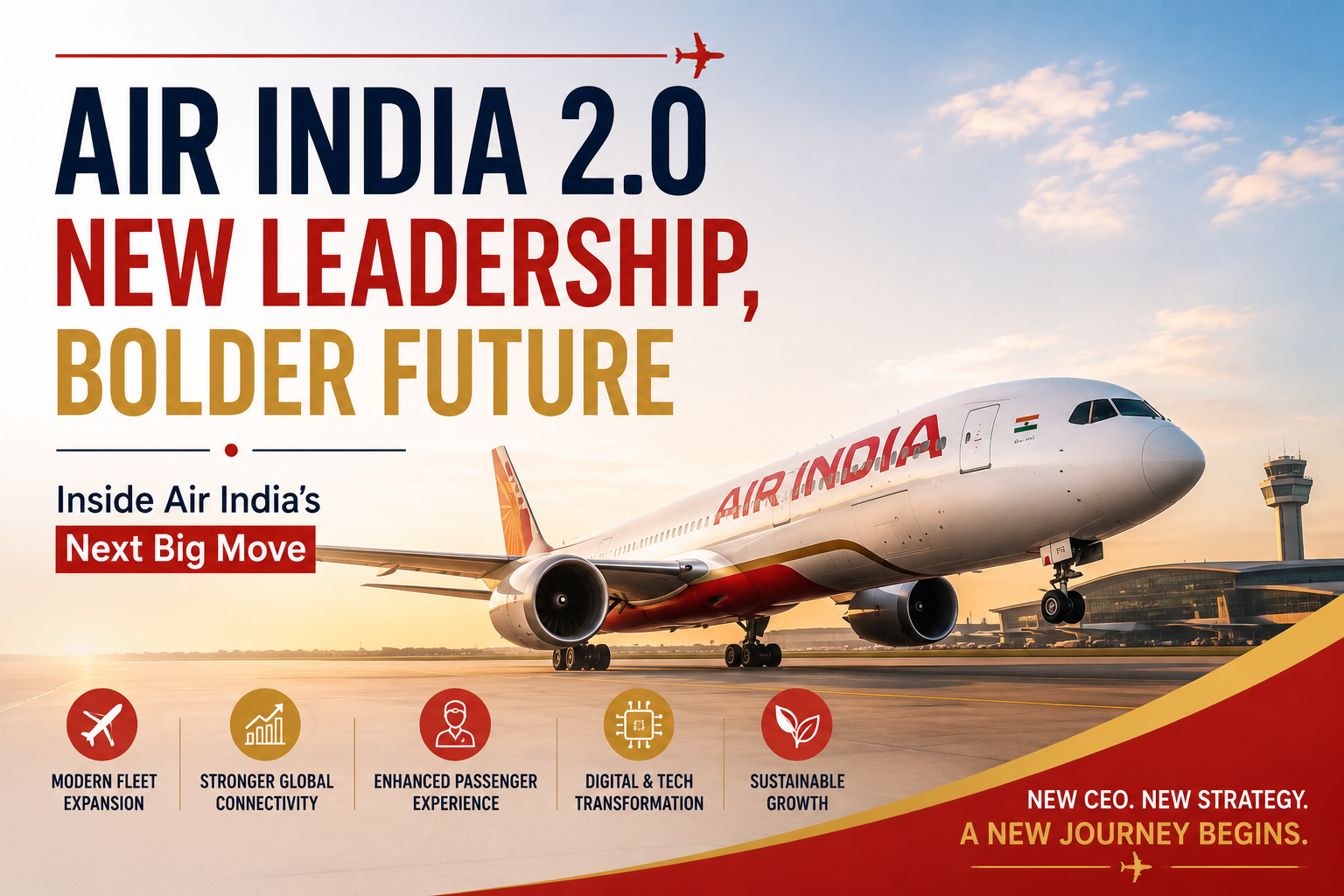
The airline’s extensive aircraft acquisition announcement established a powerful industry message which extended throughout the aviation sector. The upcoming delivery of hundreds of new Boeing and Airbus jets will transform Air India’s operational network.
Fuel efficiency improvements lead to better long-distance route performance which results in enhanced passenger comfort that meets global standards.
The airline has made cabin upgrades its most noticeable improvement. Travelers on multiple routes now experience refreshed cabin designs which include upgraded entertainment systems and cleaner layouts and new premium seating arrangements. The airline knows that modern travelers evaluate their experiences through instant online reviews and social media content.
International expansion has become another major priority.
Air India wants additional direct flight routes which will connect India to Europe and North America and Australia and Southeast Asia. The strategy focuses on passengers who used to depend on Gulf carriers for connecting flights on long-distance trips.
Technology is the main force that drives this entire transformation process. The travel experience will become more seamless through the implementation of new booking systems and baggage tracking systems and mobile applications and customer communication tools.
Airlines need to provide digital experiences which match their onboard services because those two elements define their competitive advantage. The challenge, though, remains consistency.
A passenger’s positive experience can create better perceptions but in-flight delays together with disruptive incidents will lead to rapid loss of trust. Air India uses its current operational requirements to manage the dual process of fast modernization and daily network operations for its extensive system.
The intensity of competition in India’s aviation sector continues to rise.
IndiGo controls the domestic market through its extensive network and efficient operations while international airlines focus on attracting high-end international customers. Air India now faces pressure from every direction at once.
The airline needs to develop its premium travel services because they represent a critical component of its future operations. The airline provides business-class flying to its customers through three main services which include airport lounges and enhanced onboard amenities.
Airlines will develop their 2026 operational plans based on environmental requirements. The introduction of modern aircraft helps to decrease both fuel consumption and emissions, while current sustainability discussions now shape global aviation decision-making processes.
Air India displays fleet modernization, which serves as its response to environmental concerns that continue to rise.
Passengers are beginning to notice the difference. Some flights now operate with greater efficiency than earlier flight patterns. The system still has existing operational problems which need to be resolved. The transformation process has not finished yet but the process has started to create forward motion.
The major strategic decision for Air India will not result from a single announcement which brings about immediate change. The company implements its transformation process through three main elements which include new aircraft, developed routes, digital technology enhancements and increased international operational capabilities. The airline is working to rebuild itself through new initiatives which aim to establish future standards for Indian aviation.
Airline airport lounges now function as essential elements within the companys overall business plan. Air India has started to dedicate more resources towards premium ground services which provide international passengers with extended waiting time between flights. The airline now uses its various elements which include faster check-in processes and improved customer support to create an experience that passengers will evaluate before their flight starts.
Operational teams work on their tasks from hidden locations because they need to deliver better on-time performance through their work. The organization now conducts equipment operation evaluations which include aircraft turnaround time and crew coordination and maintenance planning activities and baggage handling operations with greater frequency than before.
The entire aviation system experiences a complete network disruption because even minor delays during modern travel operations.
The airlines international image now develops together with Indias emergence as a key player in the global aviation industry. Air India aims to establish itself as an airline which connects international business and tourism travellers with India while showing the countrys rising global power and departing from its past aviation challenges.
Indian passengers maintain a deep emotional bond with the airline which has existed for many years. Air India serves as a prestigious international travel airline that older people use to fly between different countries.
This current transformation taps into that nostalgia while trying to create something more modern for younger passengers who expect speed, convenience, and reliability.