







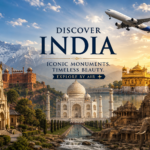


India has never really been a country you can 100% get in one single trip. It is just too large, too many layers, and yeah, too packed with surprises.
One region feels like it’s in a different planet compared to the next. Languages switch, the scenery changes big time, the food gets entirely other flavors, and even the speed of everyday life can be noticeably different from one city to another.
That’s honestly what makes India such a wildly good destination for travellers in 2026.
As travel keeps growing around the country, more people are moving past the usual photo stops and choosing bucket list style experiences that blend culture with adventure, history with street-to-sky food, plus nature and even that modern city buzz.
Whether it’s your first time or you’re coming back for another loop, India still keeps offering places that feel worth it, again and again, and they really do deserve a place on your travel list.
A lot of travellers kick things off in Delhi, the capital, where old and new India show up kind of in the same breath.
For a moment you’re right there in front of monuments, they look like they’ve been parked forever, and then suddenly you’re strolling near modern towers, high end hotels, and that kind of loud shopping streets.
The whole area can feel a little overloading at the start, but honestly it’s also the charm, because it just doesn’t really let you stay bored, not even for a second.
Delhi kind of just drops you straight into India’s energy, like no pause at all. Street food sellers crowd the main roads , old markets draw in the bargain hunters, and those well-known landmarks kind nudge you to realize how far back the country’s history actually goes.
A few hours away, Agra just sits there, like, that place everybody means when they’re talking about it, you know the one with the world-famous Taj Mahal.
Even if you’ve stared at endless photos online, being right in front of it feels way different, like your brain needs a second to catch up, for real.
The white marble shifts through the day, and the colors keep changing , as the light keeps moving, and honestly it kind feels like it’s alive.
For a lot of visitors, early mornings are still the best move, because the crowds are smaller, and the whole mood feels unhurried, more gentle.
Travellers will often call it one of those true highlights, the sort you keep in your head for the rest of the trip, even after you’re gone.
Keep going west and Rajasthan keeps pulling in visitors who want royal history and striking architecture. Jaipur, you know the Pink City nickname, has major forts, lively colorful bazaars, and striking palaces.
Just strolling along the old lanes and alleys makes it feel like you slipped into another chapter. It blends deep tradition with easy modern tourism, so it ends up being one of India’s most visited stops.
Not too far from Jaipur there’s Udaipur, often treated like one of the most romantic cities in the country. It’s boxed in by lakes and hills, so the mood feels calm in this understated kind of way that really clashes with the quicker pulse you get in larger city places.
A lot of travellers swear by the sunset moments over Lake Pichola, they’re hard to forget. And everywhere you look, you can spot scenes that feel postcard-made, especially with historic palaces reflected on still water.
If you’re after adventure, Himachal Pradesh mountains keep showing up near the top of travel wish lists. Manali draws people all year long, thanks to scenic valleys, outdoor activities, and that cool, fresh climate. In winter, snow turns everything into a true mountain escape.
When the weather warms, hiking routes, river rafting, and road trips turn into the main attractions, the go do it kind of plans.
Further north, Leh-Ladakh kind of tosses you into the most dramatic landscapes across Asia. Massive mountains, winding roads, crystal-clear lakes, plus high altitude deserts make a scenery that feels like nothing else in India.
People often say Ladakh is almost, otherworldly. And honestly the journey part is like half the fun, because the roads go through some of the highest motorable mountain passes on the planet, so you’re seeing it as you travel, not just at the end.
Kashmir keeps building its reputation as one of India’s most beautiful regions. Srinagar’s well known Dal Lake stays on everybody’s bucket list , where visitors can sleep in traditional houseboats and just watch the nearby mountains, reflect onto the water.
Not far away, Gulmarg pulls in both the warm season crowd and the winter sport fans, they come for skiing, and those snow covered landscapes that look unreal, even for a second glance.
If you’re after something more spiritual, a lot of travellers drift toward Varanasi because it is one of the oldest continuously lived in cities on Earth.
Life feels like it spills along the Ganges River banks in this almost timeless manner, like the days don’t really move. You’ll catch morning prayers and evening ceremonies, temple bells, and those centuries old traditions as well.
So whether you’re religious or not, the city’s cultural gravity is hard to brush off, honestly.
Then there’s Rishikesh, it kind gives a different spiritual vibe altogether. It sits near the Himalayan foothills so the city sort of naturally pulls in yoga practitioners, meditation folks, and even adventure travellers who just want something more hands on, more real.
White- water rafting on the Ganges adds a small spark of adrenaline to a place that’s already known for being calm. That blend of quest like energy and spiritual focus is what makes Rishikesh, feel pretty unique.
When travellers start imagining beaches in India , Goa usualy pops up first, like, right away.
It still stays one of the country’s most sought after holiday spots, mainly because it has something that fits every kind of mood.
Some visitors go for the nightlife and beach parties, but others want the quieter coastal villages, a slower walk, and sunsets that don’t feel rushed.
Goa has this mix of Indian and Portuguese influences, so it gives off a sort of uncommon atmosphere that really does seem different from anywhere else in India.
Kerala then flips the whole idea of coast, on its head. People call it God’s Own Country and honestly that nickname isn’t just for show, it’s kind of like a promise too.
It pulls travellers in with backwaters, deep green scenery, a fair chance to spot wildlife, and a strongly traditional culture that feels actually lived-in, not staged.
The houseboat journeys, along Kerala’s pretty well known waterways, are still one of the calmest things you can do while travelling across India. Palm trees hover by the canals and the local routines just unwind slowly, like you’re watching the day loosen up at the waterline, even the whole atmosphere moves a bit lighter.
Nature lovers often stack Coorg near the top, and it’s easy to get why. This hill station is in Karnataka, it’s known for coffee estates, misty ridges, waterfalls, and that steady comfortable weather that never feels too harsh.
It feels like a gentle escape from crowded city life, giving travellers time to breathe and settle into an unhurried pace.
Going further south, Ooty keeps pulling people in with its rolling tea estates, colonial style buildings , and mountain views that look kind of unreal.
Honestly, the trip to Ooty is often like half the fun, because the roads wind, around bend after bend, and then these pretty little scenes show up, constantly, like random surprise postcards. And yeah the weather is cooler too so it gets even more popular in the hotter months, when everyone is basically hunting for some relief.
Pondicherry feels like a totally different chapter though. There’s French inspired architecture, super bright colorful streets, seaside cafés, and that calm coastal vibe which you don’t really see in most Indian cities.
If you walk through the French Quarter it can feel a bit like stepping into another country, even while you’re still very much inside Indian culture and hospitality, if that makes sense.
And the north eastern region is kind of starting to draw more attention from travellers who prefer less crowded places. You know, a quieter sort of vacation.
Meghalaya really stands out, for its waterfalls, and those living root bridges, and the whole lush green scenery vibe. During monsoon season the whole area sort of turns into one of the most beautiful spots in the country, it just feels special you know.
The natural beauty there seems untouched, real and authentic, not something staged or decorated for anybody.
Darjeeling is still another go to for people who love mountains.
It’s known worldwide for its tea plantations, but the town also gives you those stunning Himalayan views, plus a cozy kind of vibe. Seeing the sunrise over Kanchenjunga from Tiger Hill it still stays, one of the most memorable experiences you can get in India, honestly.
And if you’re the kind of person who daydreams about tropical islands, the Andaman Islands should be on every single bucket-list.
Picture white sand beaches, crystal clear waters, coral reefs, and top tier diving opportunities that pull visitors in from everywhere, honestly.
These islands show India from a completely different angle, not the version most travellers even consider before they arrive.
Then there’s wildlife lovers, they have plenty of options too. National parks like Ranthambore, Jim Corbett, and Kaziranga give real chances to spot tigers, elephants, rhinos and so many other species in their own habitats.
Safari experiences keep growing, because more travellers are looking for those genuine, meaningful encounters with nature rather than something quick and shallow.
Modern India kinda has to be on everyone’s travel itinerary too, honestly.
Bengaluru has turned into one of the country’s key technology hubs, while it still keeps green spaces around, plus lively cafés and this pretty energetic cultural scene.
Hyderabad mixes historical landmarks with new development and somehow stays best known for its amazing food culture. Mumbai keeps doing what it always did, it’s still the financial capital and entertainment center, so you can get everything from historic architecture to fancy shopping and that Bollywood sparkle too.
Food has also turned into a big reason people start travelling all across India. Every region has its own flavors, plus culinary habits that feel pretty distinct, almost like a quiet signature.
You know, street food tours in Delhi, seafood in Goa, biryani in Hyderabad, those traditional thalis in Rajasthan, and then the local dishes in Kerala. It all piles up into moments you keep in your mind for a long time, and for food lovers it’s even stronger.
A lot of travellers end up chatting about the meals just as much, or sometimes more than the actual spots they visited.
One of the most satisfying parts of moving through India is the things in between destinations, all those random tiny minutes that just show up.
You might chat with a local shopkeeper, catch a sunrise view from some mountain road , stumble into a little hidden café by pure chance, or see a colorful festival while you’re just walking through a town.
Often, those moments end up sticking way more than the famous landmarks.
That’s basically what makes India special.
The country keeps surprising you. Every trip, you end up noticing, like something new… whether it’s a tucked away beach, an ancient temple, a mountain village, or a living tradition that has gone on for generations.
The range feels endless, kind like a reel you never quite finish, and that is why millions of travellers keep coming back again and again, year after year
As 2026 unfolds, India still feels like one of the world’s most compelling travel destinations. From the icy heights of Ladakh to those lush tropical shorelines in the Andaman Islands, from old cities to sleek city centers, the whole place just seems to match every kind of wanderer.
You know, a travel bucket list is supposed to light up your next plans, and really, few places can rival India when it comes to creating moments you’ll remember.
Looking for history, culture, wide open nature, street food, spiritual calm, adrenaline, or just plain rest? It’s all there, somewhere across this impressive land.
The tricky part isn’t the yes/no question of should I visit India.
The harder thing is deciding where to kick off, like where exactly your story begins.