








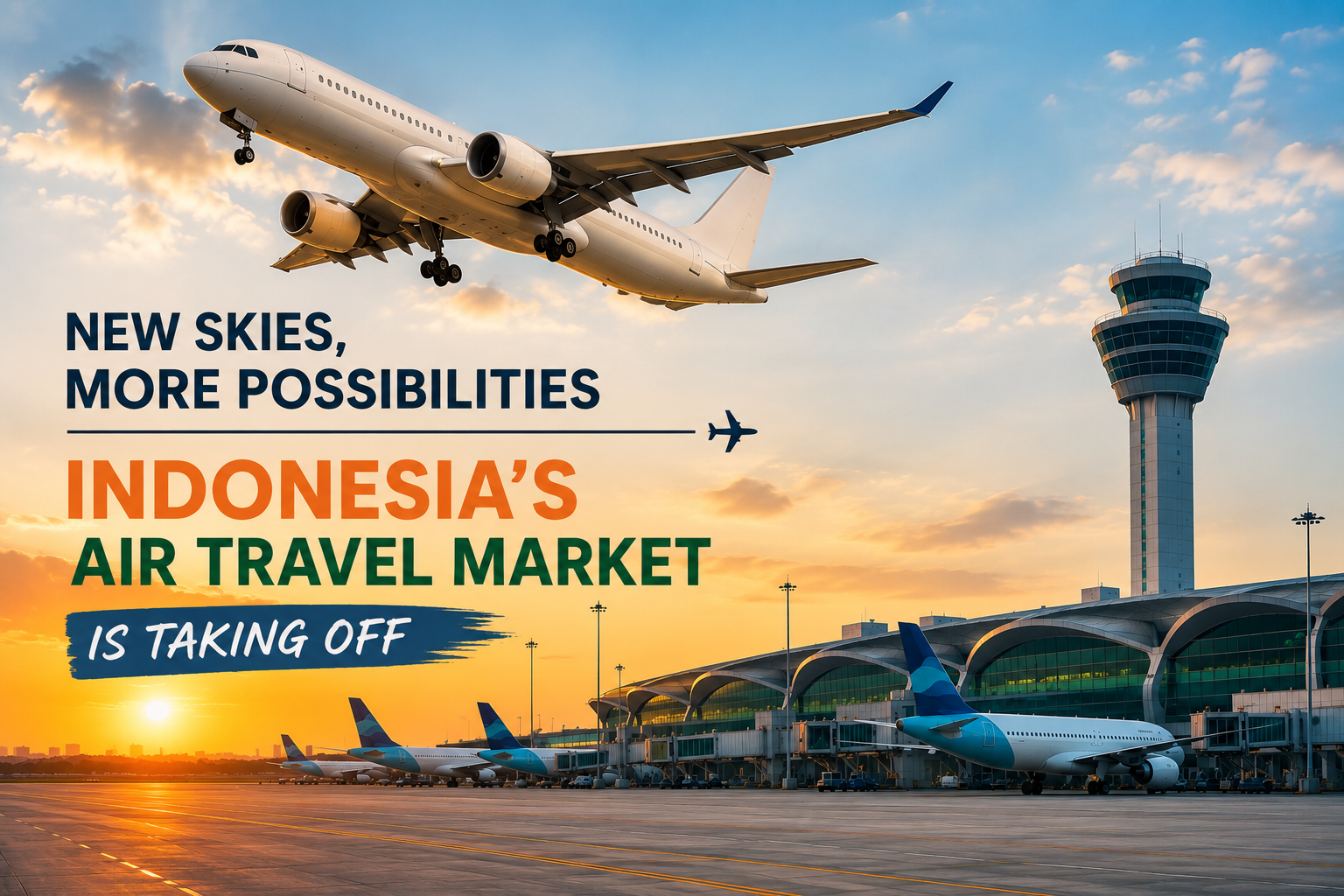
The departure halls inside Soekarno Hatta International Airport are way busier than ever, or at least it feels that way when you’re walking past the check in counters and edging toward security.
Travellers move pretty quick, like without really pausing, and the huge departure boards keep flashing destinations across Asia, Australia , the Middle East, and beyond.
Flights go out to Singapore, Kuala Lumpur, Tokyo, Sydney, Bangkok, Dubai, plus dozens of domestic cities every day. Outside the terminal windows, aircraft seem to be forming this long line, one after another, waiting for takeoff, in a way that matches Indonesia’s aviation industry growing fast , like really fast.
In Indonesia, the air travel market is kind of gaining momentum in 2026.
Passenger demand is still rising, airlines are extending their networks, airports are improving the infrastructure bit by bit, while millions of folks are taking trips more often than just a few years back.
What used to be seen as a developing aviation market is now, well, turning into one of the big growth storylines in global air travel, you know.
And the reasons are pretty easy, honestly.
Indonesia has more than 17,000 islands, so aviation isn’t only convenient. It becomes, basically, essential.
Compared with places that have strong road or rail connections, many Indonesian cities rely on flights just to keep economic activity going, tourism moving, business travel workable, and family ties connected.
For a lot of Indonesians, flying isn’t a fancy choice.
It’s a must.
A business professional going from Jakarta to Makassar, a student returning home to Sumatra, or a family planning a holiday in Bali typically depends on air travel because other options can take days, not hours.
That kind of reliance creates huge demand.
As Indonesia’s economy keeps growing, more people can travel pretty often. Higher incomes, a larger middle class, and easier access to low-cost flights have turned aviation into this normal, routine thing for many citizens.
Inside airports across the country, the growth is starting to show more and more. You can see passengers packed into waiting areas while airlines quietly add extra frequencies on the busiest routes.
Airports that used to manage moderate traffic are now prepping for record passenger numbers, because the demand keeps climbing, year after year, without slowing.
Tourism still sits as one of the biggest reasons for this expansion.
Indonesia has been pulling in global visitors for a while now, but the interest seems to be getting stronger, all the time. Bali stays one of the most recognizable holiday spots in the world, it keeps drawing in millions every year, no doubt about it.
Still travellers are looking beyond it now, not only the same shoreline, same easy routine, but other areas as well. Some are chasing different scenes and quiet vibes, and that shift feels pretty clear.
Some places that used to get limited international attention are showing up everywhere, travel blogs, social media platforms and tourism campaigns.
Visitors are finding destinations well beyond Bali, they’re checking out Lombok, Labuan Bajo, Yogyakarta, Raja Ampat, North Sulawesi, and lots of other regions with beaches, volcanoes, rainforests, diving points, cultural attractions, and these distinct local experiences.
And here’s the part that really links everything each new tourism destination creates extra demand for flights.
Airlines clearly understand that opening.
Carriers keep starting new domestic routes, while also building more international connections to match the growing tourism markets. Direct flights are becoming more common too, because travellers like convenience whenever it’s possible.
The less you have to connect, the more appealing the destination becomes. That plain reality affects how routes get planned across the whole industry.
In Indonesia, domestic aviation plays this pretty special and important role in the whole transportation system. Because the geography is what it is , air travel becomes one of the most practical ways to link far away places, like islands that are separated by water.
In many cases, flying can cut the hours down dramatically compared with sea routes or land alternatives, so it kind of makes sense people choose it again and again.
That’s why domestic routes stay among the busiest options in Southeast Asia.
Flights that connect Jakarta with Surabaya, Bali, Medan, Makassar , and other major cities keep running through the day.
These corridors support business life, tourism, education, healthcare access, and a huge number of personal trips that just don’t stop. In a way, the aviation network works like a bridge, connecting the country as one, because without it many regions would end up much more isolated than they are today.
On top of that, economic momentum is building, stronger demand kind of. Indonesia’s expanding economy keeps producing business travel across multiple sectors, and it goes on and on.
Manufacturing, technology, finance, logistics, natural resources and even international trade all add to the rising number of passengers, not just a little. Companies still need staff to move between cities in a measured way, investors go back and forth regularly too, and entrepreneurs keep looking for fresh opportunities, like more or less every day.
That kind of corporate pull helps airlines keep steady traffic through the whole year even when peak tourism seasons are already over.
If you mix business trips with leisure travel, you end up with a really solid foundation for longer term growth.
But airports still have to keep moving as well, you know. At Ngurah Rai International Airport, passenger traffic stays, pretty much consistently high as visitors come in from all over the world. The place is essentially a gateway to one of Asia’s most famous destinations, and their facilities keep getting an upgrade so they can cope with the growing pressure.
In the meantime, out in other parts of Indonesia, airport expansion projects are becoming more common, and it seems like they’re not easing up anytime soon either.
New terminals, upgraded runways, improved passenger facilities, and expanded operational capacity are helping airports prepare for what’s next, you know, future growth.
The goal is almost simple, if you say it out loud. Handle more passengers without sacrificing efficiency.
Modern travellers expect smoother experiences than earlier generations. They want shorter queues, accurate flight information , reliable baggage handling, and convenient digital services, basically everything feels faster but also more controlled.
Technology plays a major role in all of this, and it keeps showing up in small ways that add up.
Airports across Indonesia are introducing automated systems that are meant to improve efficiency and reduce congestion. Self service check-in kiosks, digital boarding passes, biometric verification, and advanced baggage tracking technologies are becoming common, not just experimental. Passengers are also managing their journeys through smart phones more often, like it’s normal now.
They book flights , pick seats, get updates, and even navigate airports using digital tools that barely existed a decade ago.
Airlines know they have to keep up with those expectations, otherwise it’s easy for passengers to switch. A strong mobile experience can influence customer loyalty almost as much as ticket pricing, maybe even more in some routes.
Competition stays pretty intense all the time in the market. In Indonesia’s aviation industry, there are full service carriers alongside low cost airlines, and they compete in a pretty aggressive way for passengers.
Each airline seems to want to separate themselves somehow, using tactics like pricing, flight timing, customer care, loyalty programs, or even small onboard experiences. Honestly, passengers get something out of it too. When there are more choices available, people usually have more flexibility and often find better value.
At the same time, airlines face constant pressure to maintain profitability while managing rising operational costs, and that part isn’t really negotiable. Fuel remains one of the industry’s biggest challenges.
Aviation depends heavily on fuel, and global energy prices can vary a lot, like really quickly sometimes. When fuel costs climb, airlines have to juggle their expenses, not just cut costs, but also keep air travel from becoming too pricey for passengers.
And you can see that stress show up in nearly every operational choice, almost immediately.
Route planning, fleet investments, ticket pricing and scheduling tactics, all of that is tied in some way to fuel economics. Even when the decision looks “local” on paper, it usually connects back to how expensive fuel will be on the day.
Modern aircraft help take the edge off some of that pressure. Newer planes burn less fuel, tend to need fewer repairs, and they also bring better passenger experiences. Airlines keep putting money into fleet modernization, because efficiency is now more important than ever.
Passengers notice this change too. Cabins feel quieter, the entertainment systems are upgraded, and the onboard atmosphere is often more comfortable on longer routes. So the travel experience keeps moving forward, kind of always.
Environmental sustainability is becoming more of a theme across Indonesia’s aviation sector now, like, really. Elsewhere around the globe airlines get heavy pressure to cut emissions and also boost their environmental outcomes.
In Indonesia the carriers are trying to find ways to modernize how they do things, at the same time as they can keep backing the ongoing passenger demand growth, which is still rising.
And this challenge isn’t only an Indonesia thing. The whole aviation industry is trying to balance environmental targets with rising travel requirements.
Sustainable aviation fuel initiatives, more efficient aircraft, and smarter day to day operational practices could reduce aviation’s environmental footprint gradually over time. Still, air travel demand, it’s not really slowing down.
Younger generations are flying more often than a lot of older cohorts used to, at least back then. Social media kind nudges people to poke around and explore, remote work brings that extra wiggle room, and lower cost fares make travel feel more doable for a wider slice of folks.
It’s not only about going from point A to point B, it’s more like they want full experiences. Fresh destinations new stories, and just a bit more variety in how they spend their time.
They want opportunities to connect with family, friends, business partners, and cultures across different regions. Air travel kind of makes those connections possible, in a way. Artificial intelligence is now starting to influence airline operations as well, it’s not just rumors. For example, predictive maintenance systems help spot potential issues before they affect flights.
Data analytics support scheduling choices, fuel management, and even customer service tweaks.
Most passengers never see those systems working behind the scenes anyway. They just notice things feel smoother, with dependable journeys, and fewer disruptions. The future of Indonesia’s aviation market looks really promising, if we’re being honest.
There’s steady population growth, economic progress, tourism expanding, and a bigger push for connectivity, all of which keep opening up space across the whole industry. Airlines are rolling out more capacity.
Airports are investing in infrastructure, and the tech side keeps getting better too, not just in the background but for the passenger experience as well.
Every evening, aircraft rise up into the skies over Jakarta, Bali, Surabaya, Medan, and countless other Indonesian cities, bringing tourists, people on business, students, workers, and families toward different places inside the country and beyond it.
Inside those cabins, passengers plan holidays, prepare presentations message loved ones, and daydream about what awaits them after landing.
Indonesia’s growing air travel market isn’t only expanding, it’s more like taking off. At a pace that’s reshaping the country’s transportation landscape strengthening its economy, and connecting millions of people in ways that used to feel far more difficult to imagine.