








The terminals never really sleep anymore. Even after midnight, airports across the Middle East keep going, alive with motion, passengers rushing toward gates.
Long haul aircraft lining up beneath glowing runway lights and departure boards constantly refreshing with cities scattered across Europe, Asia, Africa and North America.
Inside Dubai International Airport, the vibe feels almost nonstop now… luxury travellers pull designer luggage across polished floors while backpackers, business executives, tourists and families drift through huge terminals packed with restaurants, lounges, and duty-free shops.
The Middle East’s airline industry has slid into another major phase of change in 2026, and the balance of power across the region is starting to shift again, a little.
For years, a handful of Gulf airlines pretty much ran the global aviation conversation.
Massive aircraft fleets, high-end cabin experiences, aggressive international expansion, and strategic geography helped turn cities like Dubai and Doha into some of the world’s biggest travel hubs.
Passengers moving between Europe, Asia, Africa and Australia increasingly ended up connecting through the Gulf because the routes… made sense, both geographically and commercially.
That approach changed global travel, for real.
Airlines across the region are pushing, harder for market share, while governments keep investing billions into airports tourism aviation infrastructure and those international branding campaigns.
The stakes are massive, because aviation supports more than tourism alone. it ties together trade finance executive movement hospitality and wider economic pull across the region.
And the race isn’t really slowing down either.
Inside Hamad International Airport, passengers move through futuristic terminals that feel almost too polished, and it’s packed with massive art installations luxury shopping zones, and premium lounges made to impress travellers before they even board a flight.
Qatar kind of built its aviation image around luxury, precision, and long-haul connectivity, and that whole approach keeps pushing the country into this fierce competition with the neighboring Gulf aviation giants even when things look steady on the surface.
At the same time, Saudi Arabia is slowly but surely turning into one of the region’s biggest aviation disruptors.
The kingdom is pouring serious resources into tourism, aviation, entertainment, infrastructure, and international business growth as part of its longer-term economic diversification playbook.
New airlines, airport expansions, and tourism projects are changing , quickly, the way global aviation companies think about the Middle East. Saudi Arabia doesn’t want to sit on the sidelines any more, not really.
It wants a bigger slice of international travel traffic moving through the region.
And that ambition is creating a noticeable power shift across Middle Eastern aviation, in a way that’s hard to miss once you compare what cities are building now.
For years, Dubai held a dominant position as the region’s main global aviation hub. Dubai still remains incredibly powerful, of course, but newer challengers are expanding aggressively now , behind the scenes.
Airports in Riyadh, Doha , Abu Dhabi, and other Gulf cities are all trying to pull in airlines, travellers, investors, and tourism momentum at the same time. The competition, frankly, feels enormous.
Governments also get the bigger picture: modern aviation creates long-term economic influence far beyond ticket sales.
A busy airport brings hotel demand, retail spending, foreign investment, tourism income, logistics momentum, and international visibility all at once , like a chain reaction that keeps going.
Airports became sort of symbols of national ambition, and you can kind feel it.
That’s why many Middle Eastern terminals seem larger, more luxurious, and more technologically advanced than airports elsewhere in the world.
The region shaped its reputation through scale and operational precision because the first impression matters a lot in global aviation, like really right away.
Passengers notice the difference almost instantly. Inside Gulf airports, travellers pass through huge halls with automatic systems, lavish lounges, higher-end eating areas, digital way finding tools, and increasingly sophisticated biometric technology.
In a lot of cases airports are getting treated like part of the whole journey, not only as places for transport.
The luxury competition is especially intense. Middle Eastern airlines keep putting serious money into premium cabins because business-class and first-class travellers bring in huge revenue on long-haul routes.
They also understand that affluent passengers compare everything seat comfort, meals , privacy,
Wi-Fi performance, lounge experience, and even the cabin atmosphere from lighting.
And that pressure basically forces continuous upgrades. Private suites inside aircraft cabins have become more common. Business-class seating has grown wider, and the feeling is more secluded. Entertainment systems improved a lot, while airlines also refreshed onboard menus with restaurant-level dining, made to rival other premium offers for international travellers.
Honestly, the fight for high end passengers can start to feel pretty personal between Gulf carriers, you know. But the people flying are also the ones benefiting from it.
Long-haul trips across the Middle East often feel smoother, and more comfortable nowadays than they did, say about a decade ago . That’s because airlines have put real focus and major investment into newer aircraft, plus passenger experience upgrades, kind of a broader improvement rather than just small tweaks.
Still, at the same time, low-cost aviation is expanding quickly across the region too.
Not every traveller flying through the Middle East is booking luxury cabins anymore, it’s kind of shifting.
Tourism growth, younger travellers, digital nomads, and regional travel demand created huge opportunities for low-cost airlines across Gulf countries and nearby regions. Affordable travel is reshaping passenger behavior everywhere, and yeah it’s happening faster than before.
Weekend trips between Gulf cities became more common, regional tourism has climbed too. Families travel more frequently now, and younger travellers tend to book spontaneous flights rather than planning expensive international holidays months ahead.
Because of all that, the Middle East’s aviation market is turning into more of a layered thing.
Premium airlines still dominate long-haul global routes while low cost carriers expand underneath them, aggressively building regional networks. And technology is quietly pushing a lot of this change along.
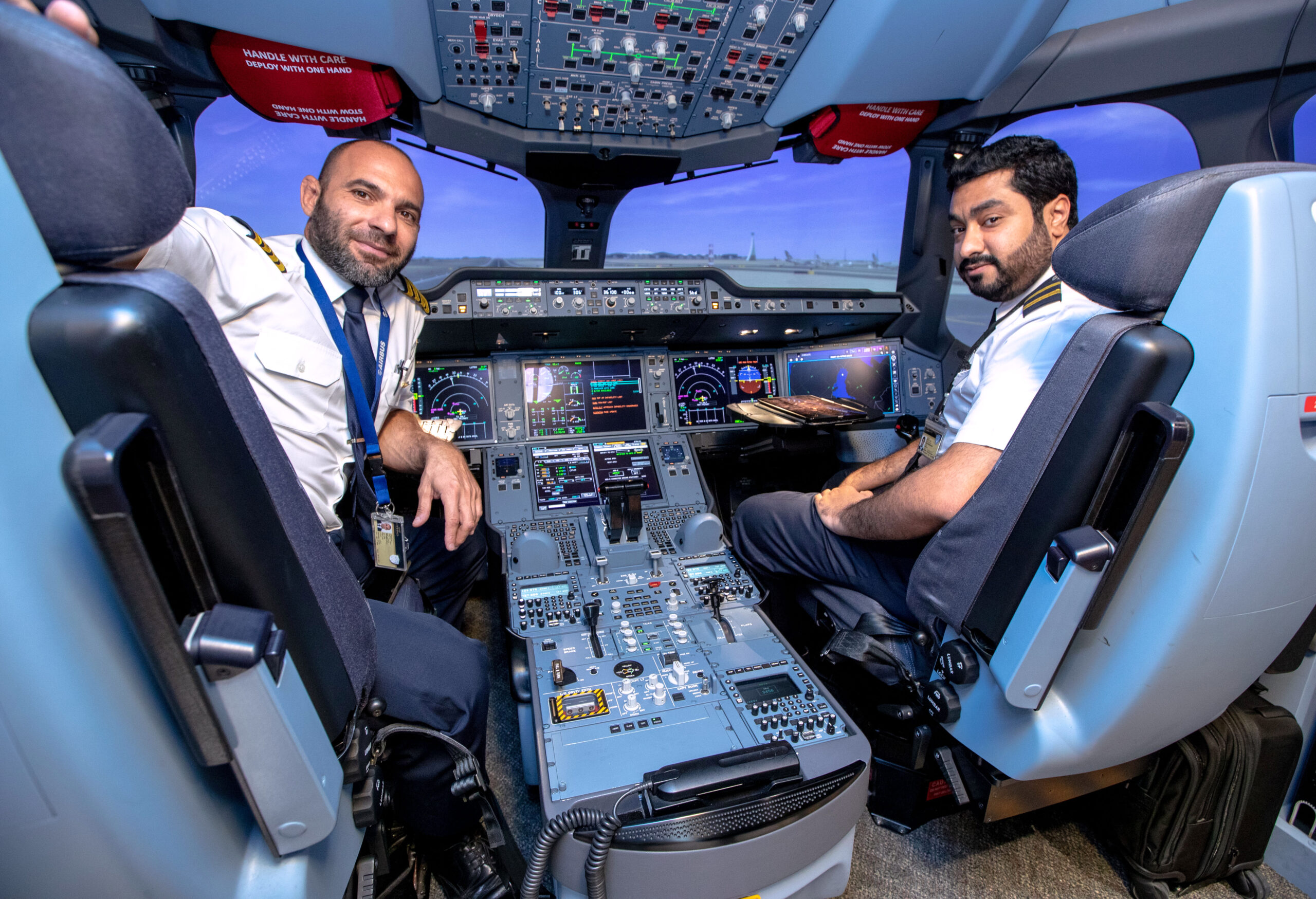
Artificial intelligence now supports fuel planning, predictive maintenance, passenger flow, crew scheduling, and operational efficiency.
At the same time, airports are rolling out facial recognition systems, automated immigration checkpoints, smart baggage handling, and digital passenger tracking systems meant to cut congestion. Most travellers notice the convenience side.
They get more accurate flight updates, smoother check-ins, and shorter waits that feel, well, surprisingly normal. But behind those systems sits massive operational complexity powered by data, automation, and real-time analytics, it’s not simple at all.
Also, the airspace across the Middle East is getting more crowded, and in a way it feels like everything is overlapping. Flights that link Europe, Asia, and Africa often cross right through Gulf corridors, mostly because the place is strategically important.
So in practice the Middle East turns into one of the busiest aviation crossroads worldwide. Air traffic controllers coordinate huge quantities of international flights every day , while airlines push timetables tightly, trying to maximize how well aircraft are used.
A single delayed aircraft can end up touching multiple continents within a few hours, and it feels like it happens so fast sometimes. In today’s aviation, timing is basically everything right now, and modern schedules are built around that reality.
Airlines sink billions into fleets, yet any aircraft sitting still on the ramp, generates zero revenue. That’s why schedules run with almost no spare buffer inserted into them, particularly during peak travel seasons. Passengers usually feel that tightness more during delays, rerouting, or any sudden disruption.
You can get a storm over Europe, congestion in Asia, or operational trouble somewhere else entirely, then the ripple effect shows up at Gulf airports surprisingly quickly. The reason is simple but huge the global aviation network is deeply interconnected now, so problems don’t stay put.
Then there’s the behind the scenes headache of fuel. Fuel prices stay a major challenge for everyone.
Even Middle Eastern airlines, despite being surrounded by energy resources, still face pressure from shifting oil markets. Jet fuel costs influence ticket pricing, route selection, and overall profit margins everywhere.
Airlines keep adjusting their approach based on market conditions because even a minor fuel change can throw off massive, international movements.
On top of all that, environmental pressure is growing. The aviation industry is getting more criticism for emissions and sustainability, and Gulf airlines can’t really sidestep those conversations anymore.
Big long haul aircraft fleets tend to draw attention from environmental groups, especially as global travel demand keeps rising quickly.
So the industry is responding, but gradually, and not always as fast as people might expect.
Airlines are putting money into newer planes with better fuel efficiency, while sustainable aviation fuel projects keep getting rolled out, but kind of slowly across global aviation markets.
At the same time airports are upgrading day to day operations with greener technologies and energy efficient infrastructure changes as well, you know the usual improvements.
Still, keeping growth and sustainability lined up is hard. Like, really hard.
The Middle East wants more tourists, more flights, bigger airports, and more global aviation influence all at once, yet environmental expectations are getting stricter worldwide.
That push pull thing will end up steering the region’s aviation future a lot over the next decade.
Tourism growth is also a big part of why the power balance keeps shifting.
Across the Middle East, countries are investing pretty aggressively in entertainment, luxury resorts, sports events, cultural attractions, and international tourism campaigns , all aimed at drawing in visitors from everywhere.
And aviation basically carries the whole arrangement.
Without solid airline networks, tourism ambitions become far harder to reach. That’s why airports across the Gulf keep expanding fast, not just a little.
Every country seems to want stronger connectivity. Every airline wants a bigger slice of the market. Every airport wants to be the next major global hub, or at least look like one.
Passengers are moving through the region in record numbers because of it.
Inside aircraft cabins crossing the Middle East tonight, travellers scroll through hotel bookings, work presentations, holiday plans, and destination videos as engines hum steadily above desert skies.
Some passengers are connecting toward Europe. Others are going deeper into Asia, Africa, or North America.
The region sits right in the middle of modern global travel lanes, and it understands how valuable that position really is.
The Middle East’s airline power shift is unfolding because the competition is no longer stuck between one or two main players. The region’s aviation scene feels like it is getting larger, a bit more pushy and fast, more tech focused, and generally far more competitive than it was before.
And somewhere under the shiny runway lights tonight, another aircraft is already getting ready to roll out for departure into increasingly jammed Middle Eastern skies.